
On this page
When a cross-border freight load is held, ask the clearing contact to confirm the reason, who can resolve it and when they can give the next update. Dispatch can then decide what to tell the receiver and when to protect a fallback delivery slot.
Separate the border decision from the delivery decision
The responsible clearing party confirms whether the vehicle can proceed. The receiver confirms whether unloading capacity is available. Give both parties the same job reference. Ask the operator where the truck can wait safely and keep the driver’s instructions current.
Worked example: the next update comes too late
A receiver needs a firm arrival update by 13:00 to keep its afternoon crew. The clearing contact expects another update at 14:30. Dispatch asks for a fallback slot before 13:00 and tells the shipper who must approve any extra cost. When release is confirmed, dispatch checks the revised travel time and gives the driver the confirmed booking. These times illustrate the decision and do not describe a particular crossing.
For example, if the agent confirms release at 14:45 and dispatch allows 90 minutes for the remaining trip and gate check-in, the estimated arrival is 16:15. If the receiver’s replacement slot starts at 16:00, ask whether it can still accept the truck at 16:15. Record the answer and give the driver the confirmed instruction.
| Step | Time |
|---|---|
| Release | 14:45 |
| Travel and check-in | 90 min |
| Arrival | 16:15 |
| Fallback slot | 16:00 |
Close the record
For a held cross-border freight load, keep the reason for the hold, release confirmation, revised booking and any approved charges in the job record. Review which checks could have happened before departure. Share your cross-border brief with Synesys for help coordinating the movement.
Further reading Kweli’s guide to planning the Johannesburg–Gaborone border handoff.
Related Synesys guide How to scope a johannesburg to windhoek freight quote.
Cross-border freight load checklist
Get the hold reason and reference from the clearing agent. Ask who owns the correction, what documents are needed and who will confirm release. Give the driver an authorised place to wait and update the receiver.
Worked example
The agent reports a mismatch between the manifest and the loaded count. Dispatch records the hold and requests the warehouse count sheet, while the declarant checks the correction route. Resume only after the responsible party confirms release.
For a South African goods declaration submitted via EDI, SARS says the Movement Reference Number “must be reflected on all correspondence with Customs.” Ask the declarant which reference applies to the shipment and record it beside your internal job number. Keep any corrected count sheet with the original evidence and note who confirmed the release.
For the underlying recordkeeping guidance, see SARS goods declaration policy.
Keep a short log showing the hold reference, the party that reported it, the correction owner and the next update time. If the receiver’s slot will expire before clearance is likely, ask the receiver for a revised slot and keep the new commitment separate from the release decision.
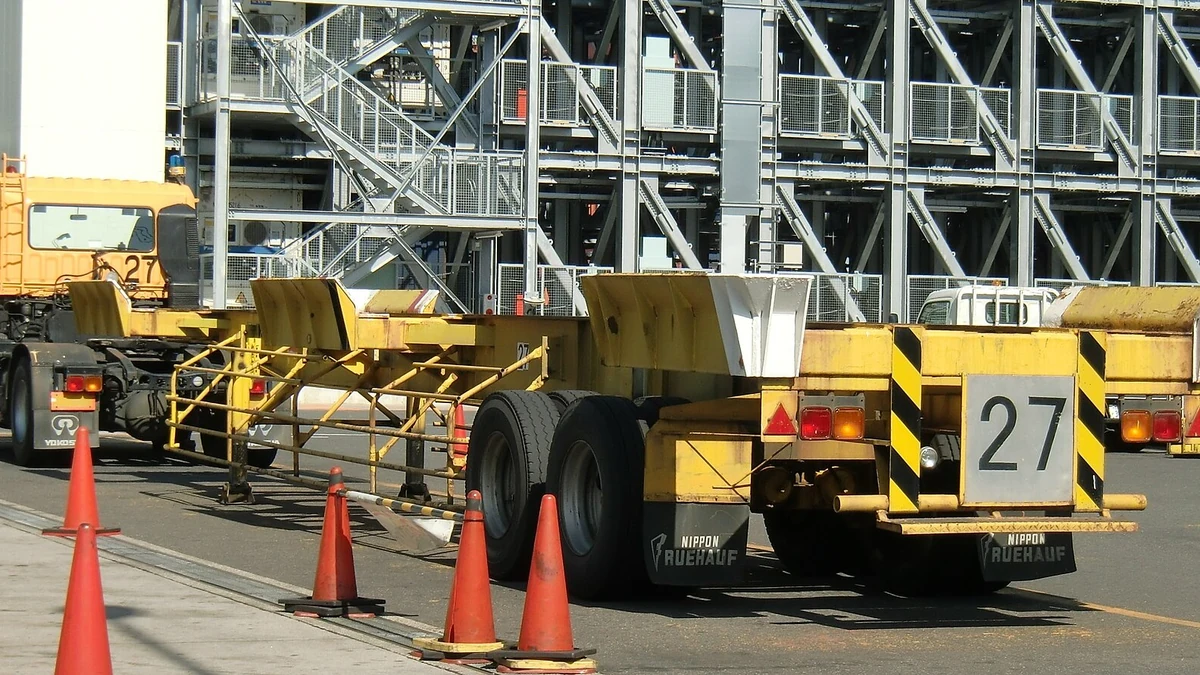
Cover photograph. Independent archival illustration: Oi Terminal, Tokyo, Japan; 1 April 2011. Yellow container chassis parked together in a terminal yard. Photograph by Gazouya-japan under CC BY-SA 4.0. Cropped and resized; no added text or logos.
Cross-border freight hold FAQs
Who confirms that a held load can move?
Ask the responsible clearing contact to confirm the applicable release. Dispatch then confirms the onward appointment with the receiver.
What if the receiver needs an update before clearance is expected?
Tell the receiver the next confirmed update time and ask about a fallback slot. Wait for confirmed release before giving a firm arrival time.
What should dispatch record if the counts differ?
Keep the hold reference, reported discrepancy and source documents. Assign the count check and declaration follow-up to the relevant parties and record their next update time.