
On this page
For a partial freight delivery, record the quantities accepted and the quantities outstanding while both sides can verify them. Keep the signed delivery record and ask the shipper to confirm what happens to the balance.
Separate the count from the reason
Match the count to the packing list and ask the receiver to note exactly what was accepted. Record whether the remaining units are still on the truck, were never loaded or need investigation. Keep the original proof of delivery and attach later corrections as separate notes.
Worked example: no space for three pallets
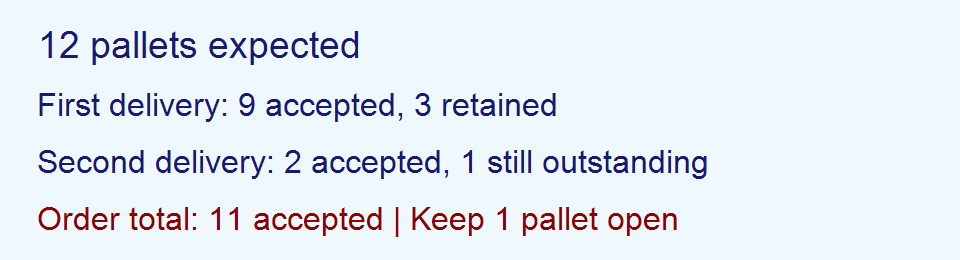
A Gauteng receiver accepts nine of twelve pallets and asks for the other three the next morning. The dispatcher records nine accepted and three retained, checks with the operator how the balance can be held safely and asks the shipper to approve the revised plan. The receiver confirms a new slot. Dispatch opens a follow-up record linked to the original job, so the three pallets get their own delivery evidence.
On the follow-up movement, list the three retained pallet IDs and carry the original order reference. Record where the pallets were held overnight and who released them for the second trip. If only two arrive at the new slot, sign for those two and keep the third open against its identifier. Update the order summary to 11 accepted and one outstanding.
Tell accounts what to reconcile
Send the signed record, outstanding quantities and any approved second-delivery charge together. Agree the invoice treatment with the customer before releasing the pack. Use the Synesys proof-of-delivery checklist to assemble the record.
Further reading Kweli’s proof-of-delivery checks before invoicing.
Partial freight delivery checklist
Reconcile expected, accepted, refused and outstanding units per stop. Have dispatch agree who will trace the balance and when the receiver gets another update.
Worked example: refused versus missing
If 18 of 20 units are accepted and one is refused, one unit is still unaccounted for. Keep the refused unit and missing unit as separate exceptions with distinct next actions.
“The SSCC is the GS1 ID Key used to identify individual logistic units.”
If the shipper uses SSCC labels, copy the identifiers into the exception record. For the 20-unit example, record the refused unit’s condition, location and custodian. For the unaccounted-for unit, compare the collection tally with the signed receiving tally and ask dispatch to trace the last confirmed handover.
When the missing unit turns up, add the time, location and person who confirmed it. Keep the original signed count. If the refused unit goes back to the shipper, attach the return receipt to that unit’s record and close its exception separately.
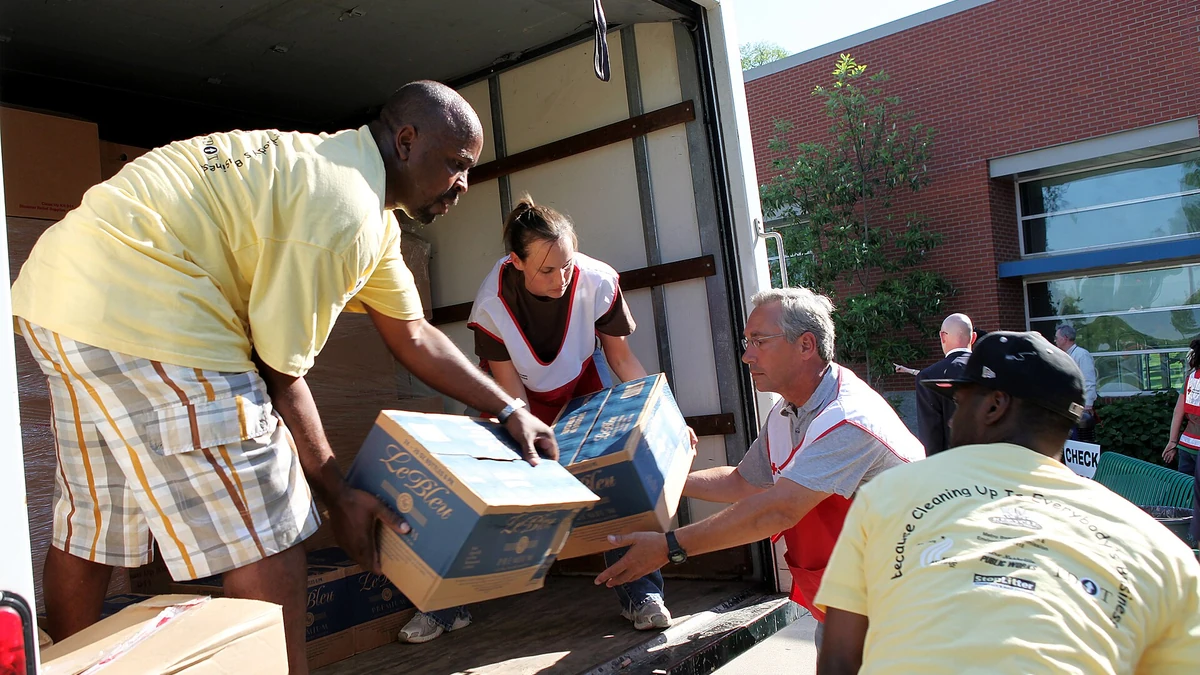
Cover photograph. Independent archival illustration: Hadley Community Center, Nashville, Tennessee, United States; 2010-05-06. Volunteers handing supply cartons down from a delivery truck. Photograph by David Fine / FEMA under Public domain. Cropped and resized; no added text or logos.
Partial freight delivery FAQs
What goes on a partial delivery note?
Record the order and stop reference, expected and accepted quantities, refused unit IDs and any units still unaccounted for. Ask the receiver to confirm the quantities they can verify.
What if the receiver asks for the balance tomorrow?
Confirm who has custody of the outstanding units and who can approve the new slot. Create a linked follow-up movement with a separate signed delivery record.
When should accounts close the job?
Agree how the outstanding units and any extra charge affect the invoice. Keep the exception open until the shipper confirms redelivery, return or another resolution.