
On this page
Before accepting a load, confirm the freight payment terms. Check who pays, when the payment period starts and what documents the payer needs. The trip can be profitable on paper and still leave you short of cash for the next job.
Find out what starts the clock
Ask whether the period starts at delivery, invoice receipt or acceptance of the invoice pack. Confirm where to send the pack and who can confirm it was received. Record how a disputed waiting charge or missing document is handled.
Worked example: the same rate ties up cash for different periods
Suppose two illustrative loads each pay R15,000 and require R9,000 in fuel, tolls and other trip outlays. The first pays 14 days after an accepted invoice. The second pays 30 days after acceptance. If both packs are accepted three days after delivery, the expected payment dates are 17 and 33 days after delivery. The second keeps the same R9,000 out of your working capital for 16 extra days. Check whether you can fund the next trip during that period.
Put the expected cash-out and cash-in dates on the same calendar. If another trip needs R9,000 on day 20, the first payment is expected before that outlay, while the second is still pending. Check the available cash against both commitments before accepting the later-paying job. If the payer takes five extra days to accept the pack, move the expected receipt date by five days as well.
Same R9,000 outlay, two payment dates
- Day 3: both invoice packs accepted
- Day 17: first payment
- Day 20: next trip needs cash
- Day 33: second payment arrives
Make closeout part of the dispatch brief
Tell the driver which delivery evidence to return and who checks it. Send the invoice pack promptly and record receipt, the due date and the person handling queries. If the payer rejects the pack, log the missing item, who will supply it and when you resent it. Recalculate the due date using the trigger in the agreed freight payment terms. Use the Synesys POD-to-invoice checklist to assemble the evidence.
Further reading Kweli’s checks before quoting a freight lead.
Freight payment terms checklist
Confirm the payer, invoice submission channel, required evidence and the date that starts the payment period. Get approval for extras from the person named in the agreement.
Worked example
For a trip delivered on 3 November and an accepted invoice dated 6 November, 30 days from delivery and 30 days from invoice produce different due dates. Record the contractual trigger before dispatch.
Check which tax invoice particulars apply to your billing process. See the SARS tax invoice guidance.
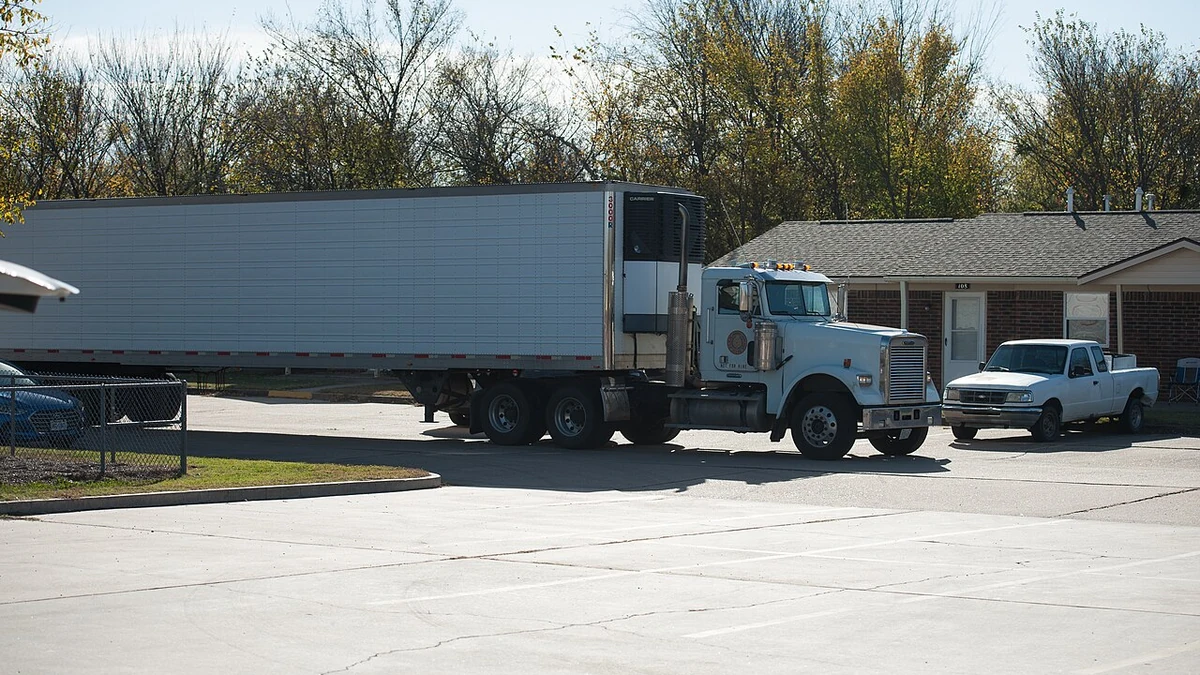
Cover photograph. Independent archival illustration: Porum, Oklahoma, United States; 18 November 2016. A white tractor and box trailer parked beside a residential delivery area. Photograph by Don Hamilton / USDA under Public domain. Cropped and resized; no added text or logos.
“Serial number and date of issue of invoice”
Keep the invoice issue date and the payer’s acceptance date as separate fields. If the agreement uses acceptance to start the clock, save the acknowledgement alongside the invoice number and use that date to calculate the due date.
Freight payment terms FAQs
When does the payment period start?
Use the trigger in the accepted terms. It may be delivery, invoice receipt or acceptance of a complete invoice pack. Record the actual trigger date.
What happens if an extra charge is disputed?
Ask the payer which line is disputed and what evidence is missing. Check whether the agreement allows payment of the undisputed amount while the parties reconcile the extra.
Which records should I keep after sending the invoice?
Keep the accepted quote, delivery evidence, approved extras, invoice and receipt or acceptance acknowledgement against the same freight job.