
On this page
Compare road freight routes using the same vehicle and delivery window. First ask the operator whether each route is suitable for the actual truck and load. Then estimate kilometres, tolls, truck time and the cost of missing the appointment.
Worked example: the shorter route takes longer
In an illustrative comparison, Route A is 430 km with R600 in tolls. Route B is 470 km with R200 in tolls. At an assumed R9/km excluding tolls and time costs, Route A costs R4,470 and Route B costs R4,430. Route B saves R40 before truck time. If it also adds an hour of paid truck time worth R250, Route A is R210 cheaper on those assumptions.
| Route | Linehaul | Truck time | Total |
|---|---|---|---|
| Route A | R4,470 | – | R4,470 |
| Route B | R4,430 | R250 | R4,680 |
Check the arrival window separately
Write down the earliest and latest credible arrival for each route. Ask the receiver how late it can unload. If either estimate overlaps the cutoff, agree a fallback appointment before releasing the vehicle. Have the operator verify current road conditions and any vehicle restrictions for the planned route.
Keep the comparison with the brief
Record which costs the kilometre rate already includes to avoid counting them twice. After delivery, compare the estimate with actual distance and time in the Synesys trip cost sheet.
Check where the cheaper route stops saving money
In the first example, Route B has a R40 advantage before time. At R250 per hour, that advantage lasts 9.6 minutes of additional paid truck time. If B takes about ten minutes longer, the financial difference is negligible. Choose using the arrival range and the operator’s confidence in that estimate. Include time separately only when the kilometre rate does not already cover it.
Compare road freight routes against the same deadline
Suppose the receiver requires check-in by 15:30 and dispatch expects 20 minutes between reaching the property and checking in. If the longest credible drive is seven hours, the truck needs to leave by 08:10. If loading cannot finish until 08:30, ask for a later slot or compare another route that the operator confirms is suitable. Write the cutoff and assumed gate allowance on the brief so the next dispatcher can recalculate it.
“An EPCIS event records what was involved in a business process step, when the event took place, where it took place”
Apply that approach to a diversion. Record the job reference, where the route changed, when dispatch approved it and the revised ETA. After delivery, keep the original route estimate alongside the actual time and tolls so the next review can explain the difference.
Further reading Kweli’s worked freight costing guide.
Road freight routes checklist
Price each option using the same vehicle, load, cost basis and receiving deadline. Ask the operator to confirm access constraints and use gate-to-gate time from previous trips where available.
Worked example
A route that is 35 km shorter saves R315 at an illustrative R9/km. If it adds R180 in tolls and 50 minutes of truck time at R240/hour, the saving becomes a R65 extra cost.
When designing shared job records, capture what happened, the time and location, and the business context. See the GS1 EPCIS visibility standard.
Ask both operators for the same arrival commitment. Record the longest credible gate-to-gate journey and subtract it from the receiving cutoff to calculate the latest departure. On a repeat lane, compare the first three trips against the estimate before using it as the default.
Road freight routes FAQs
Is the shortest freight route always cheaper?
Compare distance, tolls and additional paid truck time using the same cost basis. In the worked example, Route B saves R40 before truck time but costs R210 more once the extra hour is counted.
How do I check whether the truck can make the slot?
Subtract the longest credible gate-to-gate trip time and the site check-in allowance from the receiver’s cutoff. If dispatch cannot release the truck by that time, confirm an alternative slot.
What should I record after the trip?
Keep the route used, actual distance, tolls, departure and arrival times, plus any diversion and its reason. Compare those records with the estimate before adopting the route for repeat work.
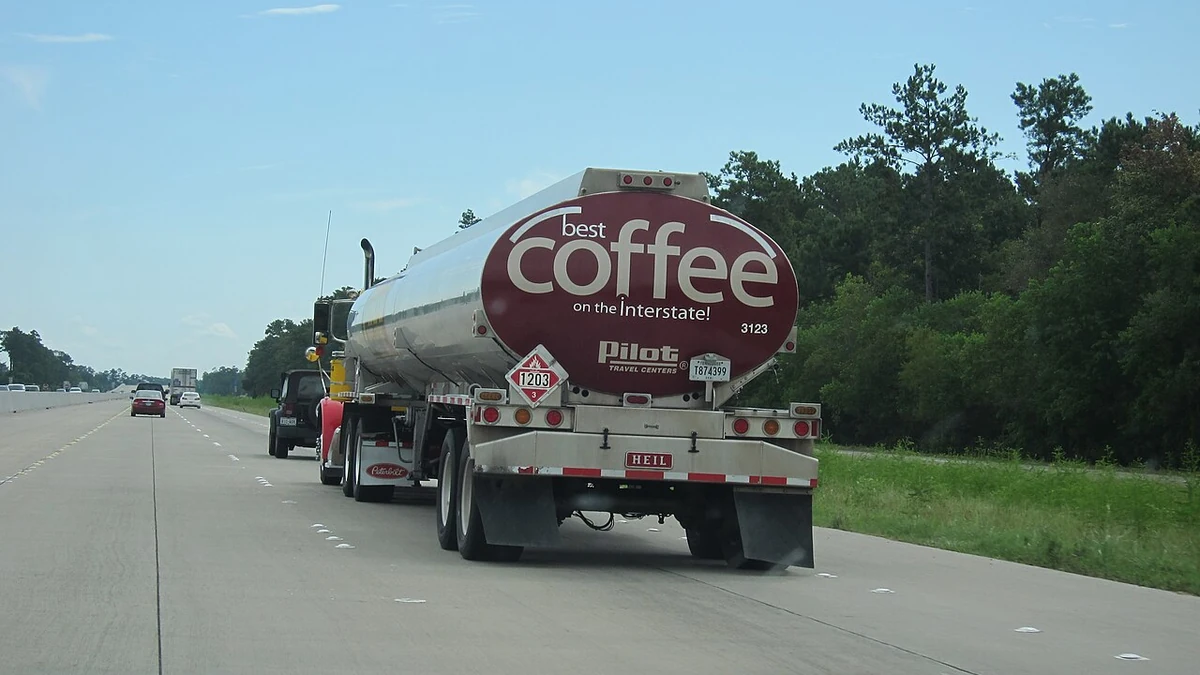
Cover photograph. Independent archival illustration: Near New Orleans, Louisiana, United States; 2010-09-03. Rear view of a tanker truck on a multilane road. Photograph by satanoid under CC BY 2.0. Cropped and resized; no added text or logos.