
On this page
Measure pallet dimensions on the loaded unit, including its base, wrap and anything that overhangs. Give the operator length, width, height and gross weight per handling unit. A pallet count alone cannot confirm fit.
Measure what actually goes on the truck
Group identical pallets together and list any exceptions separately. Include the pallet and packaging in gross weight. Flag anything that must stay upright, cannot have cargo placed on top, or needs access from a specific side. Ask both sites who will supply handling equipment.
Worked example: six pallets and one oversize unit
Six pallets at 420 kg each plus one at 680 kg give a total gross weight of 3,200 kg. If the seventh pallet is 1.45 m wide including overhang, give the operator that dimension separately. Ask them to check door clearance, usable floor space, load distribution and restraint for the proposed vehicle. Total weight alone does not settle those checks.
Confirm again when the packing changes
If the warehouse adds a pallet or repacks one, send the revised list to dispatch before vehicle release. Reconfirm the quote and booking if the change affects the equipment or handling plan. Send the measured cargo brief to Synesys.
Check the loading opening before counting deck positions
Ask the carrier for the clear door opening and usable floor width on the proposed truck. A nominal deck width does not tell you whether an oversized pallet can pass through a door or whether the forklift can turn it at the loading site. If the pallet must travel upright or be loaded from a particular side, put that constraint beside the measured size. Have the operator confirm the final layout and restraint.
For example, two packed pallets measuring 1.16 m across require 2.32 m before any gap. An illustrative 2.35 m usable width leaves just 30 mm in total. Treat that as a measurement to verify, since wrap, side fittings and loading tolerances can reduce the available space. Ask whether rotating one pallet is allowed and whether it would make unloading at the receiver harder.
| Item | Loaded width |
|---|---|
| First packed pallet | 1.16 m |
| Second packed pallet | 1.16 m |
| Together | 2.32 m before clearance |
“An EPCIS event records what was involved in a business process step, when the event took place, where it took place”
Keep the final pallet dimensions, job reference and time of measurement together. If an oversize unit is repacked after quoting, link the old and new measurements and ask dispatch to confirm which version the carrier accepted. Send the receiver the revised count and any unloading requirement before the truck leaves.
Further reading Kweli’s guide to describing truck capacity.
Related Synesys guide Truck access and delivery site checklist for road freight.
Pallet dimensions checklist
Measure length and width at the widest point, including wrap and overhang, and height from the floor to the top of the load. Send the carrier gross weight and stacking limits for each pallet type.
Worked example
A 1.20 × 1.00 m pallet has cartons extending 8 cm on each long side. The load occupies 1.20 × 1.16 m and two side by side need 2.32 m before clearance. Ask the carrier to check usable deck width and loading access.
Use the guidance on identifying logistics units to decide how your team records pallet or package IDs. See the GS1 Logistic Label Guideline.
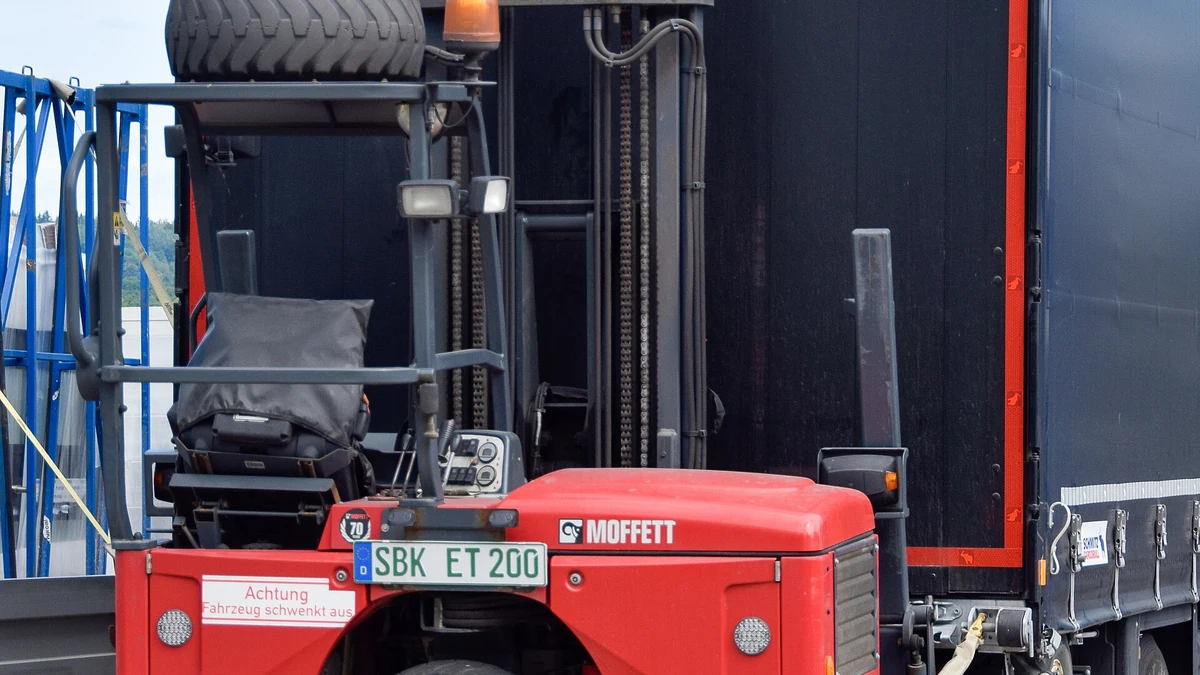
Cover photograph. Independent archival illustration: Germany; exact town not identified in the source; 2021. A red truck-mounted forklift attached to the rear of a freight vehicle. Photograph by Photographer: Mosbatho under CC BY 4.0. Cropped and resized; no added text or logos.
Pallet measurement FAQs
Do pallet dimensions include overhang?
Yes. Measure the outside of the packed unit, including wrap, straps and any cartons that extend past the base.
Can two 1.16 m wide loaded pallets fit side by side?
Their footprints need 2.32 m before clearance. Ask the carrier to check usable floor width, door opening, loading access and restraint before relying on that layout.
What weight do I send the carrier?
Send gross weight per loaded pallet, including the base and packaging. Flag unusually heavy units and give the carrier the total gross weight too.