
On this page
Confirm truck access with the receiving site before booking. Check that the proposed vehicle can reach the gate, turn inside the yard and unload at the booked time. Ask for the truck entrance and any restrictions along the final approach.
Copy this delivery site checklist
- Approach: Ask for the truck entrance, a map pin and instructions for the final turn. Ask the site to identify any known height, width or vehicle restrictions.
- Yard: Confirm whether the proposed combination can turn, reverse and wait in the designated area. Ask where early arrivals should go.
- Unloading: Confirm who supplies the equipment and staff, which side of the vehicle must be accessible, and any dock requirements.
- Booking: Record the slot, booking reference, receiving contact and latest time the site can accept the load.
- Exception: Name the person authorised to agree a revised slot or a different unloading plan.
Worked example: the right address, the wrong entrance
In an illustrative Germiston-to-Pretoria delivery, the receiver’s office sends its visitor entrance as the destination. The dispatcher calls the receiving team and learns that trucks use a separate yard entrance and that the unloading crew finishes before the office closes. The dispatcher confirms the yard pin and slot with the receiver, sends both to the driver, and asks the operator to confirm the proposed vehicle can use that entrance.
Resolve access questions before awarding the load
If the site can receive a rigid truck but has yet to confirm room for an articulated combination, leave the equipment choice open. Ask the receiver and operator to check the proposed vehicle against the actual site. If the load needs splitting or different equipment, reprice the revised movement before dispatch.
Put the confirmed details in the freight brief
Record the date, contact and approved truck approach alongside the delivery slot. If Synesys is coordinating the movement, include those details in your freight enquiry.
Confirm truck access from the road to the bay
Work through the route in the order the driver will use it: approach road, gate, yard, unloading point and exit. Ask the receiver to identify any overhead obstruction or tight turn after the gate. Give the operator the actual loaded height and vehicle configuration and ask for confirmation against the approved route. In the example below, the gate is 4.1 m but the obstruction is 3.8 m. The wider clearance at the entrance does not resolve the restriction inside the yard.
- Gate: 4.1 m clearance
- Inside yard: 3.8 m obstruction
- Confirm loaded height and margin with the operator
If the receiver offers a different unloading point, confirm where the vehicle can stop, which side must remain accessible, who supplies equipment and who will supervise the handoff. Ask whether that arrangement can still meet the booked slot. If the truck has to wait for an escort or yard marshal, include that time before committing to its next job.
“An EPCIS event records what was involved in a business process step, when the event took place, where it took place”
Apply that principle when the entrance changes. Keep the job reference, old and new gate pins, approval time and receiver’s name in the same record. Have the driver acknowledge the revised pin before arrival. If the site cannot confirm an approach, ask the driver to contact dispatch from a safe place before entering the yard.
- Truck gate pin and approved approach
- Unloading point, equipment and site contact
- Receiving slot, escort and fallback instructions
Price a truck access fallback before dispatch
If an articulated truck cannot reach the bay, ask whether the site can accept a rigid vehicle and whether the shipment will fit without splitting it. Get the carrier to confirm the actual dimensions, payload and unloading method. If two vehicles are needed, confirm whether the receiver can accept both on the same day and whether the price includes both stops and handling.
For example, a R7,500 direct quote may be cheaper than two R4,000 runs if the original truck can use the approved entrance. If the direct option also requires R700 in authorised rehandling, its total rises to R8,200. The split option costs R8,000 before any extra charges. Compare both on the same tax basis and check the slots before accepting either price.
Write the approved fallback into the booking rather than leaving the driver to choose at the gate. Include who can approve it, what would trigger the change and where dispatch should send the revised instructions. If the approach changes after release, confirm receipt of the update and keep the previous pin in the record so accounts can reconcile any extra distance or waiting later.
Further reading Write a Freight RFQ That Small Carriers Can Quote Properly (Kweli Corridor Network).
Related Synesys guide Pallet dimensions for a road freight quote.
Truck access checklist
Ask the receiver for approach photos, measured gate clearance and the unloading arrangement. Give the operator the full access brief before assigning the vehicle.
Worked example
A receiver confirms a 4.1 m gate height but an overhead obstruction farther inside measures 3.8 m. Ask the carrier to verify the whole approach against the actual loaded vehicle or agree another unloading point.
When designing shared job records, capture what happened, the time and location, and the business context. See the GS1 EPCIS visibility standard.
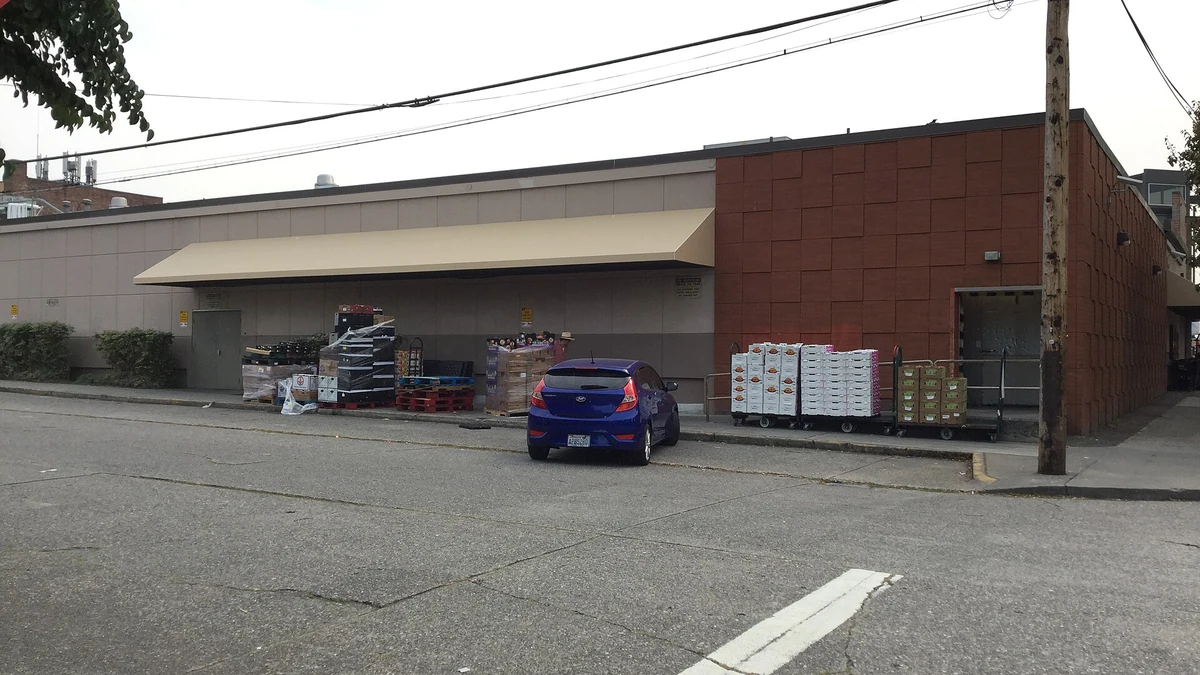
Cover photograph. Independent archival illustration: Wallingford, Seattle, Washington, United States; 2017-09-16. Pallets and goods outside the rear loading area of a grocery store. Photograph by Northwest Retail under CC BY-SA 2.0. Cropped and resized; no added text or logos.
Truck access FAQs
Is the street address enough to confirm truck access?
Ask for a pin for the truck gate, the approved approach and any restrictions along the route to the bay. A visitor entrance can be on another road.
Which clearance should dispatch use?
Use the most restrictive confirmed clearance along the approved approach. Have the operator check it against the loaded vehicle and confirm the required margin before dispatch.
What if the site cannot unload the booked vehicle?
Confirm a suitable unloading point or compatible replacement vehicle with the site and carrier. Agree any price or appointment change before releasing the truck.