
Incoterms for road freight allocate delivery tasks, costs and risk between seller and buyer. Choose a suitable rule, name the precise place and state the version. Then align the sale, transport booking and customs instructions; the three-letter label is not a complete shipment plan.
Last verified: 17 November 2026. South African shipper education; verify the actual shipment, contract, policy and destination requirements before dispatch.
In this guide
What Incoterms for road freight actually settle
A Boksburg seller and a Botswana buyer can agree a price yet disagree about loading, border clearance or unloading. Incoterms® rules provide a common language for those delivery responsibilities when incorporated into the sale contract. They do not turn a vague place name into a usable handover point.
ICC’s own explanation of commercial contracts states that Incoterms rules do not determine transfer of ownership. Treat payment terms, title, product conformity, dispute resolution and the consequences of delay as matters that need their own contractual treatment. A transport manager should not infer them from FCA, DAP or another label.
Applying Incoterms for road freight means connecting the commercial rule to the real journey. Identify the seller, buyer, collecting carrier, exporter, importer and receiver. Those roles may be performed by different organisations. A clearing agent can carry out a task for a party, but that does not automatically rewrite the allocation agreed in the sale.
“do NOT deal with the transfer of property/title/ownership of the goods sold.” — ICC, Incoterms and commercial contracts.
Keep the title and payment clauses in the sale agreement. A delivery rule should not be asked to do work outside its scope.
Use rules that match the transport mode
ICC’s Incoterms 2020 resources distinguish rules for any mode from the sea and inland-waterway group. When selecting Incoterms for road freight, consider the any-mode rules rather than casually writing FOB Johannesburg. FOB is not a generic synonym for “you collect”. The selected rule and its precise meaning should be understood by both parties.
| Rule or group | Practical road-freight question | Issue to make explicit |
|---|---|---|
| EXW | Is the seller only making goods available? | Loading and export arrangements need careful attention |
| FCA | Where is delivery to the buyer’s nominated carrier? | Seller premises and another named place work differently |
| CPT / CIP | Is the seller arranging carriage to a destination? | Risk handoff is not necessarily at that destination |
| DAP / DDP | Is the seller delivering ready for unloading at destination? | Import clearance and duties/taxes differ between the rules |
| DPU | Is delivery to be completed unloaded? | Confirm unloading capability and the exact point |
| FAS / FOB / CFR / CIF | Is the actual movement the sea/inland-waterway situation covered by the rule? | Do not use them as loose labels for truck collection |
Download this article’s main table (CSV)
This table is an orientation aid, not the full rules. Read the selected ICC rule and agree the named point. If the contract already uses a different edition, do not silently change it on the transport instruction. Resolve the change with the sale-contract parties first.
Find the event where risk changes
With Incoterms for road freight, the delivery event matters more than an arrow on a map. Under FCA at the seller’s premises, the loading handover differs from FCA at another named place. Under DAP and DDP, delivery is at the named destination ready for unloading. The selected point should be specific enough for the people making the handover to recognise it.
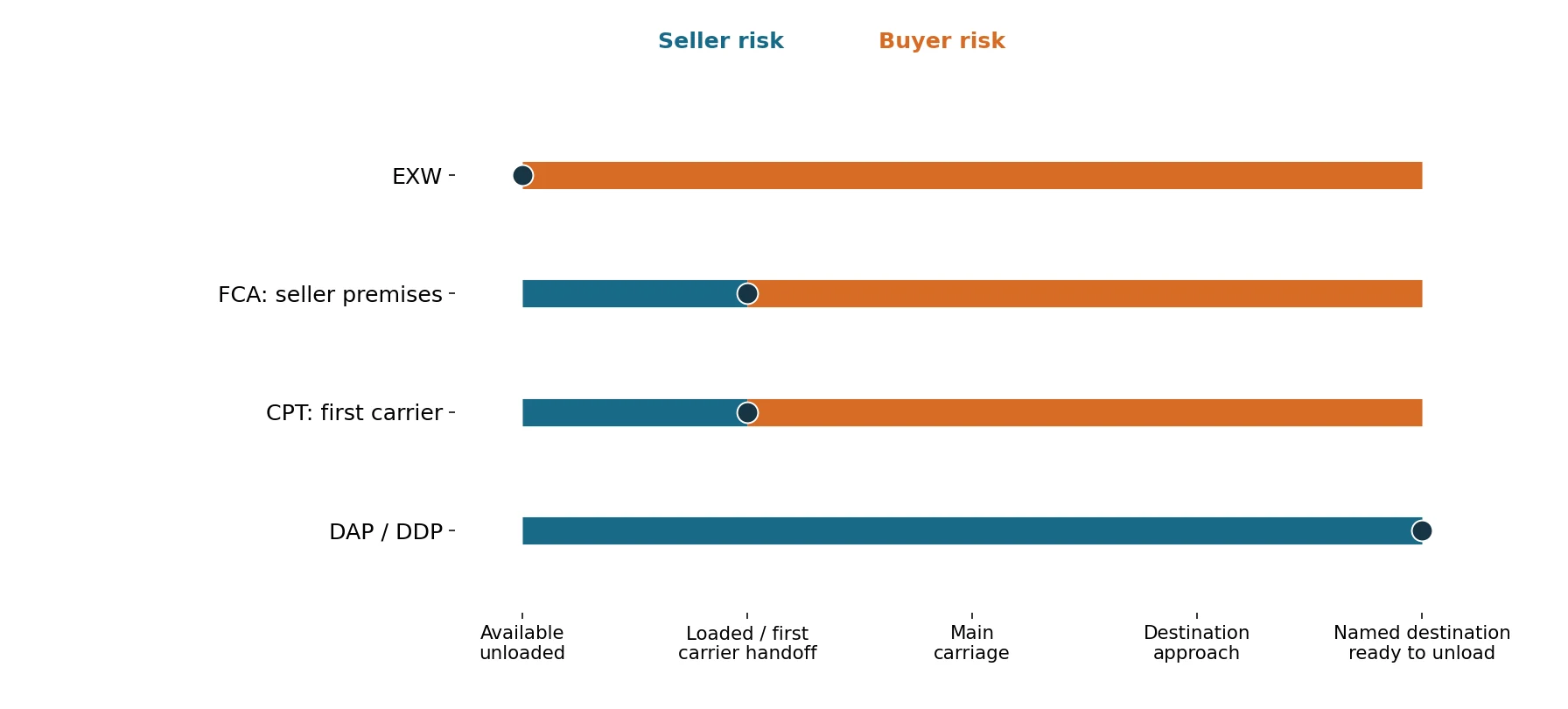
| Term | Seller risk until the event | Then |
|---|---|---|
| EXW | Available, unloaded | Buyer risk |
| FCA: seller premises | Loaded / first-carrier handoff | Buyer risk |
| CPT: first carrier | Loaded / first-carrier handoff | Buyer risk |
| DAP / DDP | Named destination, ready to unload | Seller risk to this point |
The Incoterms for road freight figure compares simplified situations, not every exception in the rules. Ask who records the handover and what proves it happened: a loading tally, carrier receipt or receiving record may each serve a different purpose. A transport tracking update that says “arrived” does not establish that contractual delivery occurred.
Do not confuse risk with fault. Risk allocation in the sale and a claim against a carrier are different questions. If damage occurs, preserve the records and obtain advice on the applicable contracts. The cargo insurance versus carrier liability guide explains why one certificate cannot answer all the recovery questions.
Payment of carriage does not always mean risk at destination
CPT is a common source of misunderstanding. The seller arranges carriage to the named destination, while delivery to the carrier is the relevant risk handoff under the rule. ICC’s checklist and flowcharts explain the distinction between departure and arrival arrangements. Make the delivery point and paid destination explicit instead of assuming they are one place.
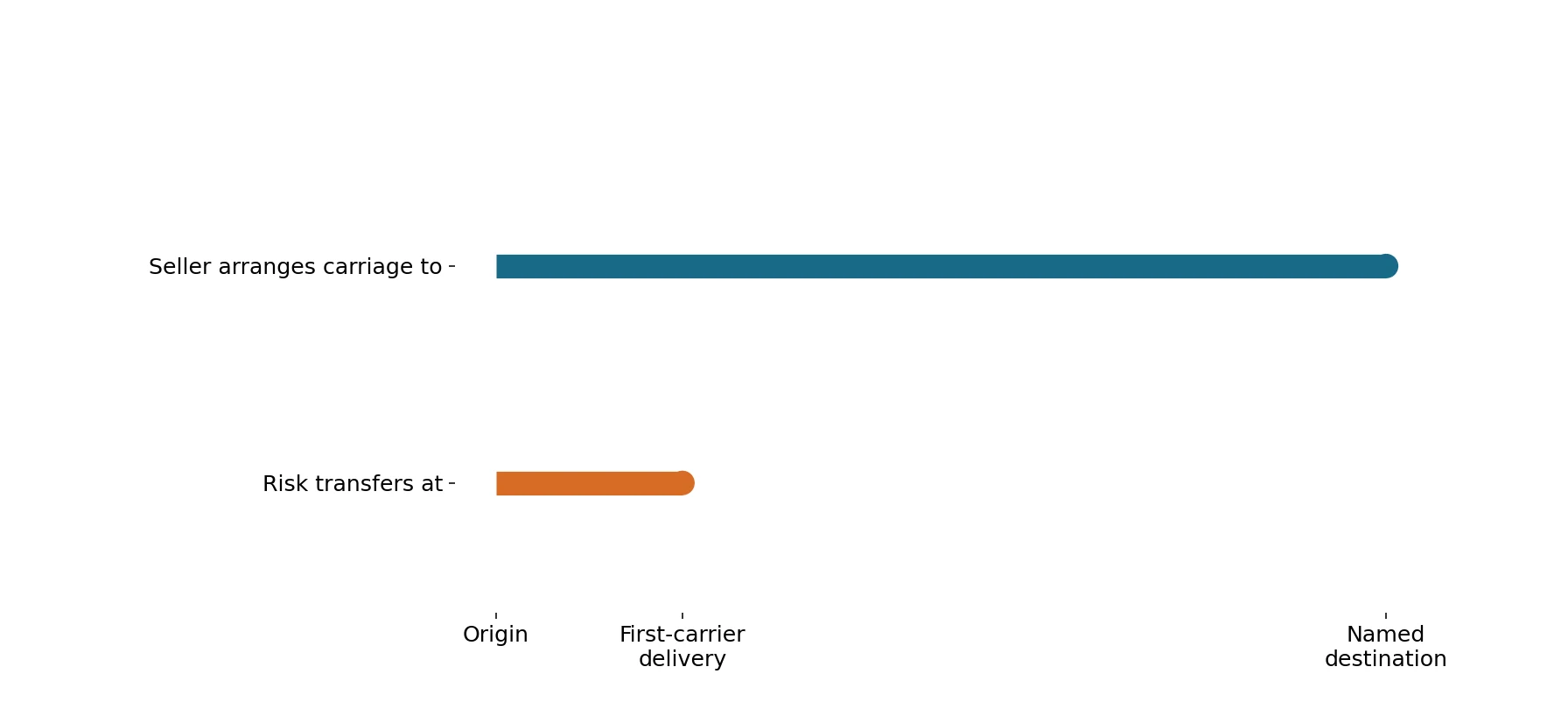
| Item | Point |
|---|---|
| Seller arranges carriage to | Named destination |
| Risk transfers at | First-carrier delivery |
Illustrative booking situation. A seller arranges carriage from Boksburg to a named Gaborone receiving point. The buyer reads the transport invoice and assumes the seller carries the transit risk until arrival. Before departure, both parties should check their agreed Incoterms for road freight and align insurance and handover records with the selected rule. The fact that one party paid the freight does not answer the risk question.
The transport booking should not hide this distinction in an internal note. Give the buyer the agreed delivery evidence and notify the relevant contact when the carrier takes over. A commercially useful handover is one the parties can explain later using the contract and records, not the recollection of whoever happened to book the truck.
Translate the rule into named tasks
| Task | Name a responsible party | Evidence or instruction |
|---|---|---|
| Collection loading | Seller/buyer and actual handler as agreed | Exact site; equipment; loading point; handover record |
| Export clearance | Party allocated the task under the chosen rule | Agent authority and required documents |
| Main carriage | Party contracting for carriage | Accepted booking and carrier instructions |
| Import clearance and funding | Party allocated responsibility | Importer identity; agent; document and funding readiness |
| Destination handover | Receiver and delivering party | Named point; appointment; ready-to-unload or unloading arrangement |
| Insurance review | Party carrying the relevant exposure | Policy confirmation for its actual interest and journey |
Use the cross-border freight documents guide to prepare the clearance pack. Customs law and registration requirements still apply. A sale term cannot make an ineligible party a lawful importer or remove a documentary requirement. Check the destination arrangements with the competent clearing adviser before the truck is committed.
To put Incoterms for road freight into operation, connect the chosen rule to the freight handoff ownership guide. A named person should know who supplies loading equipment, who confirms readiness and who is contacted if the appointment changes. The sale contract establishes the allocation; the operational instruction makes it workable.
A one-page Incoterms release check
Record the agreed Incoterms for road freight wording from the accepted sale contract in the shipment brief. Then complete the worksheet below. If the brief and the invoice disagree, stop and resolve the discrepancy with the parties rather than choosing whichever version is easier for dispatch.
| Field | Required clarity |
|---|---|
| Rule and edition | Agreed three-letter rule and Incoterms version |
| Named place and point | Country, town, site address and meaningful handover point |
| Delivery event | What must have happened for delivery under that rule? |
| Clearance | Who handles export, transit and import tasks as applicable? |
| Costs and funding | Who authorises and pays each relevant charge? |
| Physical work | Who loads, unloads and provides equipment? |
| Evidence | Which record proves each relevant handover? |
| Exceptions | Who can approve a change to the sale or transport instruction? |
Use FCA versus EXW for collection-side decisions, DAP versus DDP for destination clearance responsibilities and the named-place guide to make the handover precise. These supporting articles solve narrower questions; they should not be treated as substitutes for reading the applicable ICC rule.
Recheck the relevant Incoterms for road freight instructions if a route changes or a delivery is refused. Do not assume the three-letter rule automatically answers the price of waiting, a return trip or a new delivery attempt. Those situations need the actual contracts and a clear authorised instruction.
Questions shippers ask
Do Incoterms decide when I own the goods?
No. ICC identifies ownership as outside the rules’ scope. The sale contract needs to address title and payment separately from delivery costs and risk.
Can I use FOB for a road shipment?
Do not use FOB as a casual label for collection by truck. It belongs to the sea and inland-waterway group. Choose a rule suitable for the actual transaction and transport arrangement.
Does paying freight mean I carry the risk until delivery?
Not necessarily. Under a rule such as CPT, the paid destination and risk handoff are different. Read the selected rule and identify the exact delivery event.
Is the city enough as the named place?
It can leave a serious operational ambiguity. Specify the site and meaningful handover point, then check that the contract, invoice and transport instruction use the same wording.
Continue in this learning cluster
Use the related guides when the next decision becomes specific:
- FCA vs EXW: Who Loads the Truck and Handles Export Clearance?
- DAP vs DDP: Import Clearance and Tax Responsibilities Before Delivery
- Incoterms Named Place: Write a Handover Point People Can Actually Use
Bring the completed worksheet and your actual shipment details to a freight conversation with Synesys. This guide helps prepare the decision; it does not promise an insurance outcome, legal approval or transport availability.
Sources and verification
- ICC: Incoterms and commercial contracts — checked 17 November 2026.
- ICC Incoterms 2020 — checked 17 November 2026.
- ICC Incoterms 2020 checklist and flowcharts, 2024 update — checked 17 November 2026.
The examples and visuals are original Synesys teaching models. Illustrative figures are deliberately separated from sourced facts and must not be used as tariffs, actual claim settlements or legal vehicle capacities.
Continue with this topic
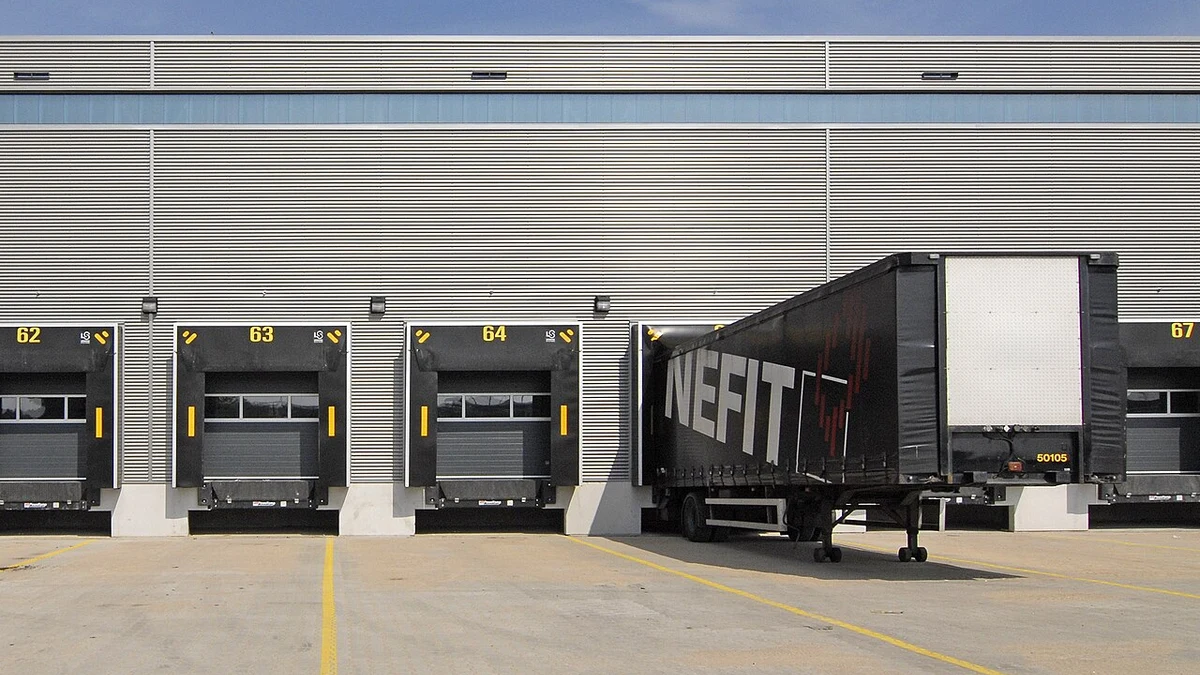
Warehouse loading docks, photographed in May 2011. Archive illustration of the physical handover environment. Photo: Mark LS / CC BY-SA 4.0. Cropped and resized. This is documentary stock imagery, not a claim that Synesys owns the pictured facility, vehicle or shipment.