
On this page
If a truck will miss its delivery slot, contact the receiving team as soon as the revised arrival range is credible. Ask whether they can still unload and get a confirmed slot before dispatch sends the driver new instructions.
Separate the ETA from the booking
When a truck will miss its delivery slot, dispatch first needs a credible estimate. The dispatcher estimates arrival from the latest reliable position and expected travel time. The receiving site controls when it can unload. Record the estimate and the confirmed appointment separately so the driver does not arrive expecting a slot the site has not agreed to.
Worked example: a Pretoria receiver closes its gate at 15:30
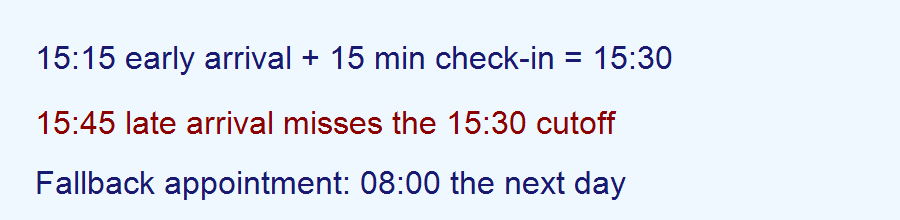
In this example a truck from Germiston was booked for 14:00 but now expects to arrive between 15:15 and 15:45. The receiver confirms that unloading cannot start after 15:30 and offers 08:00 the next day. The dispatcher checks with the operator where the vehicle can wait safely, asks the shipper to approve the revised delivery and any cost implications, then sends the driver one confirmed instruction.
At the late end of the estimate, the truck reaches the gate 15 minutes after the cutoff, before any check-in time. Ask the site whether its cutoff applies to gate arrival or the start of unloading. If it applies to unloading and check-in takes 15 minutes, a 15:15 arrival leaves no buffer. Keep the next-day slot confirmed unless the site explicitly accepts the same-day plan.
Keep one record of the decision
Keep the original slot, revised estimate, name of the receiver who confirmed the change and the time the driver was updated. If extra costs are likely, record the basis and approval against the job before closeout. For a movement coordinated by Synesys, include the receiver’s latest unloading time in your freight brief.
Further reading Kweli’s guide to recording freight delays and making the next decision.
Related Synesys guide What to do when a truck is waiting to load.
Missed delivery slot checklist
If a truck will miss its delivery slot, ask the receiver whether they can still accept it and confirm any revised slot in writing. Share the new instruction with the driver and update downstream commitments.
Worked example
At 12:10 the driver estimates arrival at 13:45 against a 13:00 slot. If the site can offer 15:00 but requires arrival by 14:45, confirm safe waiting and give the driver the revised gate instruction.
When designing shared job records, capture what happened, the time and location, and the business context. See the GS1 EPCIS visibility standard.
If a truck will miss its delivery slot and the site cannot offer another appointment, confirm whether the receiver can keep the load on its schedule for the next day. Give the receiver an arrival range and explain which delay is confirmed. If there is no same-day appointment, ask where the load can wait and who will approve storage or redelivery. Record the agreement before issuing a new driver instruction.
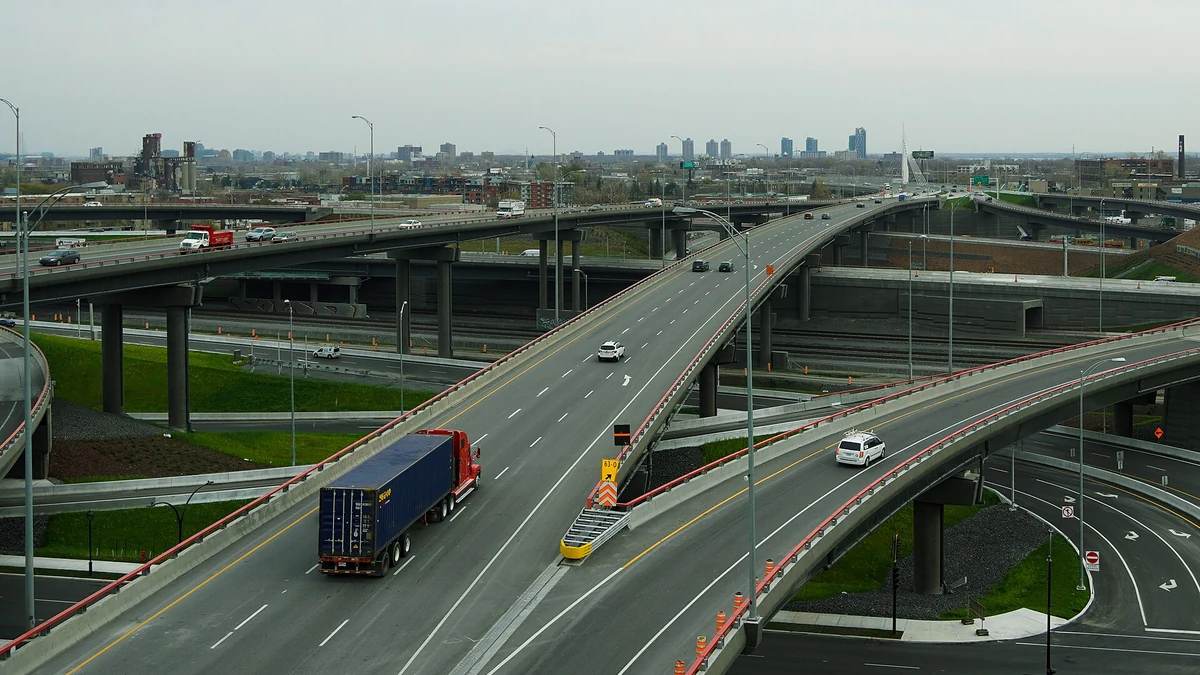
Cover photograph. Independent archival illustration: Decarie interchange, Montreal, Canada; 2020-11-07. A container truck crossing a bridge above an urban road interchange. Photograph by Destroducks under CC BY-SA 4.0. Cropped and resized; no added text or logos.
“An EPCIS event records what was involved in a business process step, when the event took place, where it took place”
GS1 guidance on visibility events
Keep the time and site of the actual handover separately from the revised estimate and appointment confirmation.
Missed delivery slot FAQs
When should dispatch notify the receiver?
Send an update when the latest reliable arrival range shows the booking is at risk. Ask whether the site can still unload and give a time for the next update.
What if the new arrival range crosses the cutoff?
Ask the receiver for a fallback slot. Confirm whether the cutoff is for arrival, check-in or the start of unloading before promising a time.
What should the driver receive after rebooking?
Send one confirmed instruction with the new slot, gate, booking reference and any approved waiting location. Ask the driver to acknowledge it.