
FCA vs EXW is often a decision about loading and export clearance. At the seller’s premises, FCA includes seller loading of the collecting vehicle; EXW makes the goods available without that loading obligation. Agree the exact place and responsibilities before collection.
Last verified: 17 November 2026. South African shipper education; verify the actual shipment, contract, policy and destination requirements before dispatch.
In this guide
FCA vs EXW at the seller’s premises
For a Johannesburg factory, the FCA vs EXW choice needs more detail than a statement that the buyer may collect the goods. That phrase does not settle who operates the forklift, who bears the loading risk under the sale or who handles export clearance. EXW and FCA can produce different answers even though the same truck arrives at the same address.
ICC’s Incoterms 2020 wallchart distinguishes FCA at the seller’s premises from FCA at another named place. For the seller-premises situation, the goods are loaded on the buyer’s collecting vehicle. The FCA vs EXW comparison in this guide is deliberately limited to that situation; do not copy it onto a terminal delivery without checking the rule.
Identify when delivery has happened
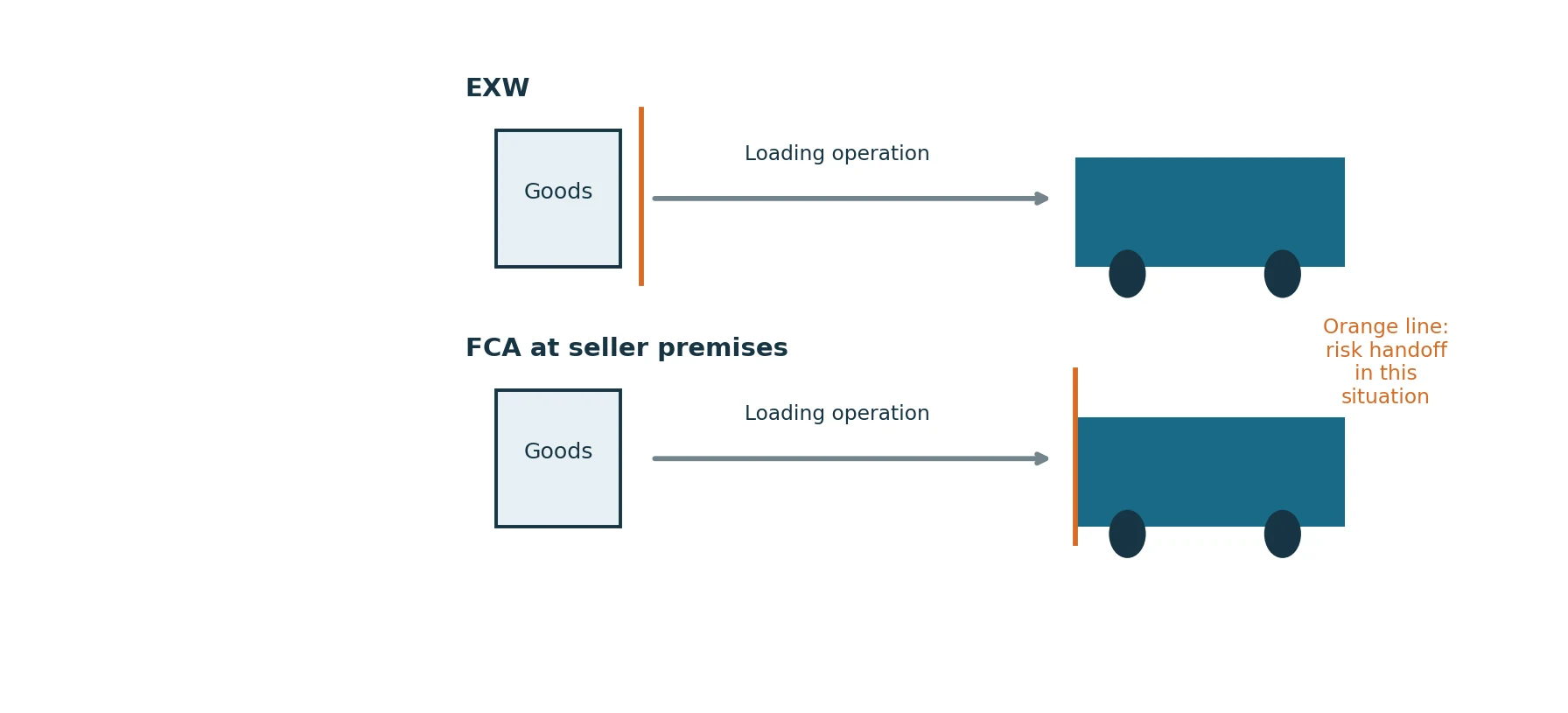
In this FCA vs EXW seller-premises comparison, EXW starts from goods made available, while FCA delivery involves the loading handover. Ask the sale-contract parties to identify the agreed event and the record that will show it happened. A driver arriving at the gate is not the same as the goods being loaded and handed over.
Do not ask a driver to sign a blanket clean receipt before the goods can be checked. Agree how the loading count, package condition and any reservation will be recorded. The freight handoff ownership guide helps turn that agreement into an operational responsibility rather than a vague expectation.
Export clearance needs an arrangement that can work
In the comparison, FCA allocates export clearance to the seller, while EXW leaves that obligation with the buyer. Assistance obligations and practical limits still need to be understood. ICC’s checklist cautions traders about choosing arrangements they cannot practically perform. The sale term does not override customs registration or documentary requirements in the country of export.
| Responsibility | EXW | FCA at seller premises |
|---|---|---|
| Loading collecting vehicle | Buyer | Seller |
| Export clearance | Buyer | Seller |
| Question | EXW at seller premises | FCA at seller premises |
|---|---|---|
| Who loads the collecting vehicle under this comparison? | Buyer obligation | Seller obligation |
| Who handles export clearance under the rule? | Buyer obligation, with relevant assistance provisions | Seller obligation |
| What must be named? | Place of delivery | Place of delivery |
| What must still be checked? | Lawful export arrangement, handling and evidence | Lawful export arrangement, handling and evidence |
Download this article’s main table (CSV)
For a South African exporter and a foreign buyer, ask the clearing adviser how the required export actions will be performed and by whom. Do not simply place the foreign buyer’s name into a form and assume the EXW label makes the arrangement lawful. Use the cross-border documents guide for the actual clearance brief.
A collection problem to resolve before the truck arrives
Illustrative situation. A Boksburg seller quotes EXW for six machinery crates. The buyer books a truck but assumes the seller’s forklift team will load it. The seller expects the carrier to do the lifting. Nobody has confirmed lift points, package masses or loading responsibility. The shipment is not ready merely because a collection slot exists.
The parties should first resolve FCA vs EXW and the handling arrangement, then issue matching instructions. If they choose FCA seller premises, state the precise address and collection point and confirm suitable loading equipment. If they retain EXW with a separate loading arrangement, record the agreed variation and obtain appropriate contractual advice instead of assuming a casual email changes every consequence.
Make the transport quote match the decision. If handling requires a crane or another specialist method, obtain the package information and competent plan. A forklift symbol in a booking form does not prove the equipment can safely handle the crates. The load planning guide identifies the physical inputs.
The collection release worksheet
| Field | Entry to agree |
|---|---|
| Sale wording | Chosen rule, edition and exact named place |
| Goods readiness | Package IDs, counts, dimensions, masses and packing status |
| Loading | Responsible party, operator, equipment and safe method |
| Export | Responsible party, authorised agent and document readiness |
| Carrier handover | When it occurs, who signs and how exceptions are recorded |
| Changes | Who can approve a different truck, time or handling method |
Record the FCA vs EXW choice in the accepted instruction sent to the buyer, seller and collecting carrier. Ask each to confirm the part it must perform. Keep the accepted version with the invoice and transport booking. If the contract says FCA but the invoice says EXW, resolve the inconsistency before relying on either document at the loading bay.
Use the Incoterms road freight pillar for the broader decision, DAP versus DDP for destination clearance and the named-place guide to eliminate address ambiguity. The value of the label is the clarity it creates for the actual people making the handover.
Questions shippers ask
Does FCA always mean the seller loads the truck?
No. The FCA delivery arrangement differs between the seller’s premises and another named place. This article’s loading comparison is specifically FCA at the seller’s premises. Check the full rule for the actual location.
Can EXW work for an export shipment?
The parties must be able to perform the allocated tasks lawfully and practically. Have the competent clearing adviser verify the export arrangement; do not assume the label replaces registration or documentation requirements.
Is “buyer collects” a complete delivery term?
No. Identify the rule and edition, precise named place, loading responsibility, export arrangement and evidence of handover. Those details prevent different assumptions at the collection point.
Continue in this learning cluster
Use the related guides when the next decision becomes specific:
- Incoterms for Road Freight: A Practical Guide for South African Shippers
- DAP vs DDP: Import Clearance and Tax Responsibilities Before Delivery
- Incoterms Named Place: Write a Handover Point People Can Actually Use
Bring the completed worksheet and your actual shipment details to a freight conversation with Synesys. This guide helps prepare the decision; it does not promise an insurance outcome, legal approval or transport availability.
Sources and verification
- ICC Incoterms 2020 wallchart — checked 17 November 2026.
- ICC Incoterms2020 checklist and flowcharts — checked 17 November 2026.
The examples and visuals are original Synesys teaching models. Illustrative figures are deliberately separated from sourced facts and must not be used as tariffs, actual claim settlements or legal vehicle capacities.
Continue with this topic
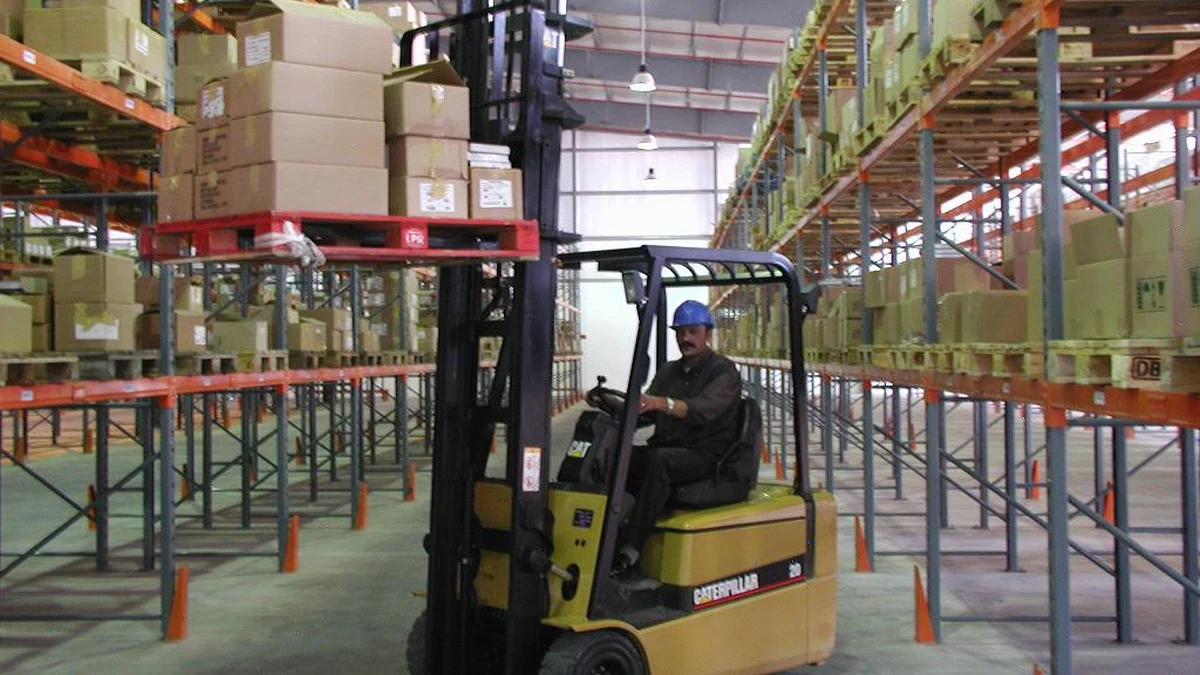
A forklift working within warehouse racking. Archive photograph, not an instruction for loading or lifting. Photo: Marketing Team / Public domain. Cropped and resized. This is documentary stock imagery, not a claim that Synesys owns the pictured facility, vehicle or shipment.