
DAP vs DDP mainly changes the seller–buyer allocation of import clearance and related duties and taxes. Both involve delivery at the named destination ready for unloading. Before choosing DDP, confirm the seller can actually arrange lawful import clearance in the destination country.
Last verified: 17 November 2026. South African shipper education; verify the actual shipment, contract, policy and destination requirements before dispatch.
In this guide
DAP vs DDP: the import task must have an owner
A South African seller comparing DAP vs DDP for delivery to a Botswana warehouse may think DDP simply means a more complete transport price. The important difference is the import obligation. Under DAP, import clearance and the related duties and taxes are allocated to the buyer. Under DDP, that allocation falls to the seller, subject to the full rule.
ICC’s official checklist warns that practical realities can prevent a seller from undertaking import clearance. ICC Academy’s explanation of common Incoterms questions also discusses the difficulty. These are reasons to verify the arrangement before quoting DDP, not reasons to relabel an unworkable plan “delivered duty paid” and hope the agent resolves it.
Separate delivery, clearance and unloading
| Issue | DAP | DDP |
|---|---|---|
| Main carriage to named destination | Seller obligation | Seller obligation |
| Import clearance | Buyer allocation | Seller allocation |
| Import duties and taxes | Buyer allocation | Seller allocation |
| Delivery state | Ready for unloading at named destination | Ready for unloading at named destination |
| Unloading | Do not assume seller unloading; examine rule and carriage arrangements | Do not assume seller unloading; examine rule and carriage arrangements |
| Practical check | Buyer’s importer, agent and funding readiness | Seller’s ability to fulfil destination import requirements |
Download this article’s main table (CSV)
Neither side of the DAP vs DDP comparison should be read as permission to arrive at an unprepared warehouse. Confirm the appointment, usable entrance and unloading equipment. If the transaction needs seller unloading, address that explicitly with the appropriate rule and instructions; DPU is a different delivery arrangement. Read the full selected rule rather than relying only on this summary.
When applying DAP vs DDP, do not confuse the party allocated a cost under the sale with the agent physically paying it on a customs platform. Record who is legally entitled to act, who advances the money and who receives the supporting evidence. Those roles need to work together without being treated as interchangeable.
An illustrative budget makes the funding question visible
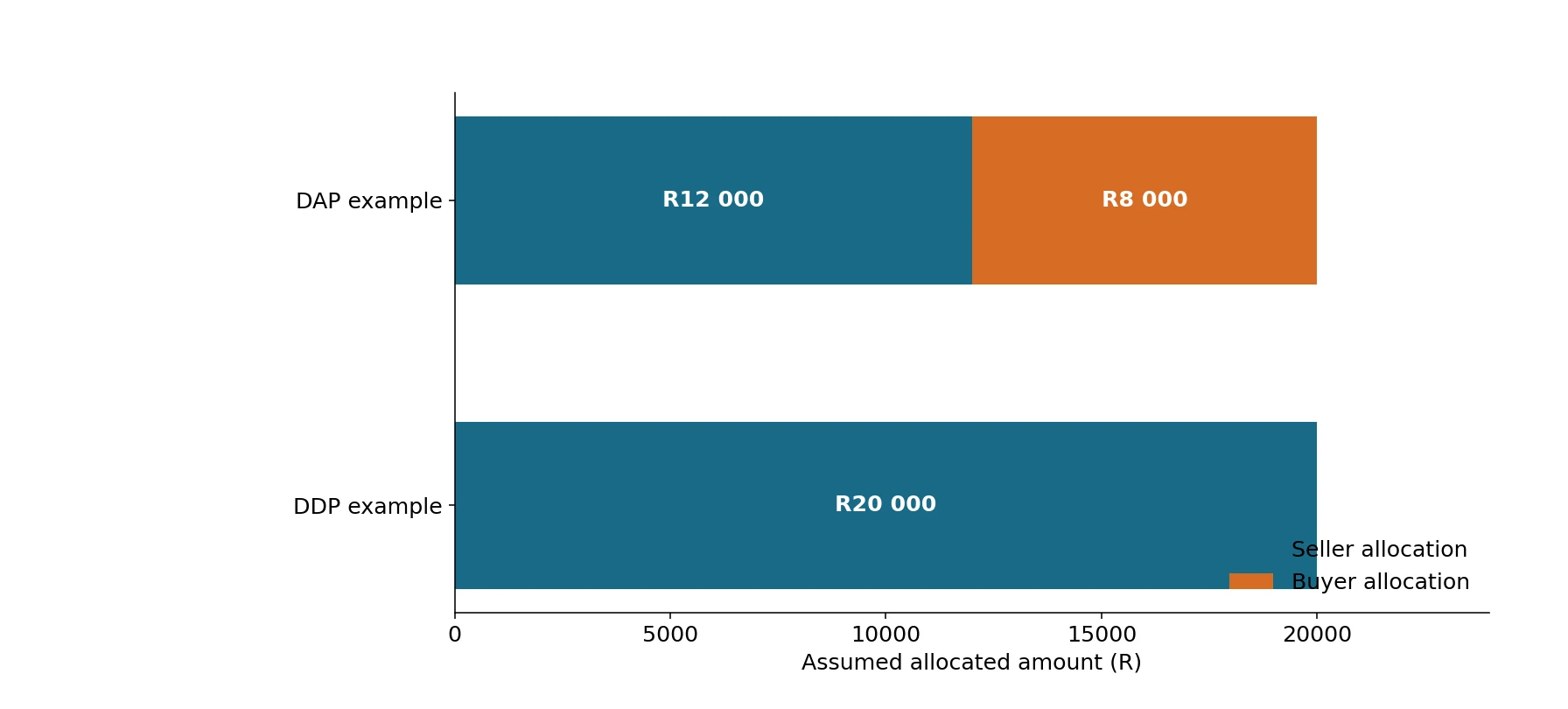
Illustrative amounts, not market prices or a tax calculation. Assume R12000 for the agreed transport scope and a provisional R8000 combined allowance for import-related charges. The total assumed amount is R20000. In a simplified DAP comparison, the seller’s transport allocation is R12000 and the buyer’s import allowance is R8000. In the simplified DDP comparison, the seller must plan for both.
| Example | Seller allocation (R) | Buyer allocation (R) | Total (R) |
|---|---|---|---|
| DAP example | 12 000 | 8 000 | 20 000 |
| DDP example | 20 000 | 0 | 20 000 |
This chart does not calculate duties, VAT, exemptions or a seller’s profit. Actual import amounts need the correct goods classification, value, origin and destination treatment. The R8000 is deliberately an invented teaching allowance. Use the landed cost guide for building a properly evidenced budget, then obtain the country-specific clearance calculation.
A DAP vs DDP decision should prevent a truck waiting while the parties argue about who must fund clearance. Agree the payment channel, approvals and evidence before departure. A purchase order saying “all inclusive” does not identify the importer or make a missing declaration ready.
Ask whether the import arrangement is legally workable
For DDP, obtain written confirmation from the competent destination adviser about the seller’s proposed arrangement. Identify any registration, representation or other requirement before accepting the term. This article does not claim one importer rule applies across every SADC country. A solution used in Botswana should not be copied onto a Zambia shipment without checking it.
Import readiness has several dependencies
Ready for the import step? It depends on all three of these:
- Lawful importing arrangement
- Documents and instructions
- Funding and authorisation
For DAP, the buyer should provide the clearance contact, document requirements and funding arrangement early enough for the transport plan. The seller still needs to provide the documents and assistance required by the contract and chosen rule. “Buyer clears” is not a reason to dispatch a shipment with missing commercial information.
When an appointment or route changes, inform the clearance contact as well as the driver. A different receiving point or border can affect the operational brief. Use the cross-border freight documents guide and the handoff ownership guide to make the change traceable.
A destination release record
| Field | Confirm before departure |
|---|---|
| Exact sale wording | DAP or DDP, named point and agreed edition |
| Importing arrangement | Named party, competent adviser and lawful process |
| Documents | Commercial and transport information, required approvals and owner |
| Funding | Who authorises, advances and reconciles the actual charges |
| Arrival handover | Named site and point, receiver, appointment and unloading arrangement |
| Exceptions | Who receives a hold notice and authorises the next step |
Ask the seller and buyer to record their DAP vs DDP choice in the same accepted version of this record. If the seller quotes DDP but later asks the buyer to carry the ordinary import obligation, resolve the sale terms before treating the request as a routine transport instruction. The carrier should not be left to decide a dispute between the contracting parties at the border.
Read the Incoterms road freight guide for the broader framework, FCA versus EXW for collection-side decisions and the named-place guide for a precise destination. The aim is a delivery arrangement the participants can actually perform.
Questions shippers ask
Does DDP mean the seller unloads?
Do not assume that. DAP and DDP deliver ready for unloading under the rules; unloading arrangements and costs require attention to the full rule and carriage contract. If seller unloading is intended, consider the appropriate contractual arrangement, including DPU where suitable.
Can a seller choose DDP in every country?
Only choose it after verifying a lawful, practical import arrangement in the destination. The sale term cannot create registration or representation eligibility that local law does not allow.
Does DAP remove the seller’s document duties?
No. The buyer’s import obligation does not remove the seller’s relevant document and assistance duties under the chosen rule and sale contract. Agree the actual document pack before dispatch.
Continue in this learning cluster
Use the related guides when the next decision becomes specific:
- Incoterms for Road Freight: A Practical Guide for South African Shippers
- FCA vs EXW: Who Loads the Truck and Handles Export Clearance?
- Incoterms Named Place: Write a Handover Point People Can Actually Use
Bring the completed worksheet and your actual shipment details to a freight conversation with Synesys. This guide helps prepare the decision; it does not promise an insurance outcome, legal approval or transport availability.
Sources and verification
- ICC Incoterms2020 checklist and flowcharts — checked 17 November 2026.
- ICC Academy: FAQs on Incoterms2020 with Bob Ronai — checked 17 November 2026.
The examples and visuals are original Synesys teaching models. Illustrative figures are deliberately separated from sourced facts and must not be used as tariffs, actual claim settlements or legal vehicle capacities.
Continue with this topic
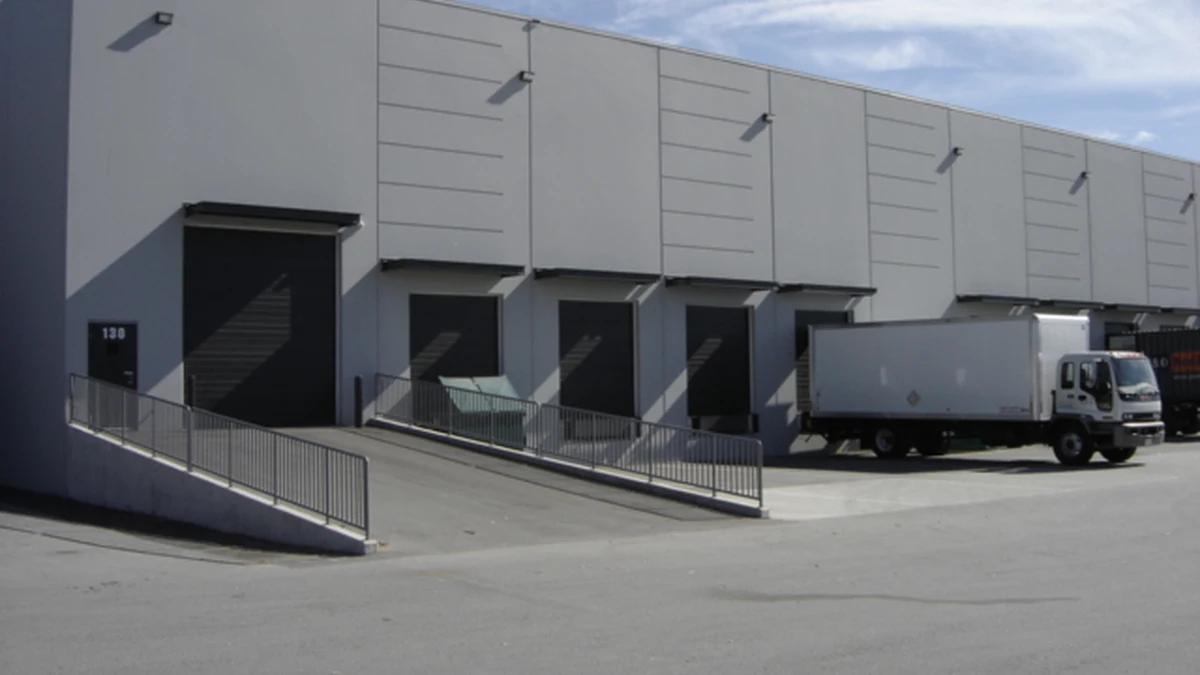
Warehouse loading docks and vehicles, uploaded in February 2006. Illustrative archive photograph. Photo: Jandrinov at English Wikipedia / Public domain. Cropped and resized. This is documentary stock imagery, not a claim that Synesys owns the pictured facility, vehicle or shipment.