
Imported components do not automatically disqualify a product from SADC origin, but local assembly does not automatically qualify it. Identify the finished product’s applicable rule, document the actual manufacturing process and assess the inputs using that rule’s definitions.
Last verified: . South African guidance; destination-country rules must be checked separately.
In this guide
Imported components: apply the product rule, not a slogan
“Made locally” can describe employment, factory location or branding. A preferential origin claim has a narrower customs meaning. The shipper needs evidence that the product satisfies the relevant rule, not an attractive general statement about local activity.
The SADC processing-list introductory notes explain that the working or processing conditions apply to the product concerned. The product-specific list is therefore part of the assessment, rather than a universal percentage copied from another product. Confirm the current tariff-line requirement with the adviser before making a claim.
A producer using imported components may perform substantial work and still need to demonstrate the specific operation or value condition in its rule. Conversely, a product using a non-originating input may qualify if the applicable requirements are met. Neither conclusion can be drawn from the presence of imported parts alone.
Imported components: separate purchase source from origin status
| Input record | What it establishes | What it does not establish alone |
|---|---|---|
| Overseas supplier invoice | Commercial source and price | Final product’s origin outcome |
| South African distributor invoice | Local purchase transaction | That the component is originating |
| Producer declaration or supporting evidence | Origin claim for a specified input or product scope | That every future batch remains unchanged |
| Factory production record | Operations actually performed | That those operations satisfy the applicable product rule |
| Finished-product cost sheet | Recorded cost structure | The legally correct valuation basis for an origin calculation |
Download this article’s main table (CSV)
When assessing imported components under a value rule, use that rule’s definitions. A convenient production-cost total may differ from the ex-works price or another basis required by the applicable text. A percentage becomes misleading when its numerator and denominator come from different concepts.
Where the rule requires particular processing, document that process. A photograph of a factory and a payroll total are not substitutes for the operation the rule specifies. Ask the production manager to describe the steps, inputs and batch controls in language that can be checked.
Worked example: a correct percentage can answer the wrong question
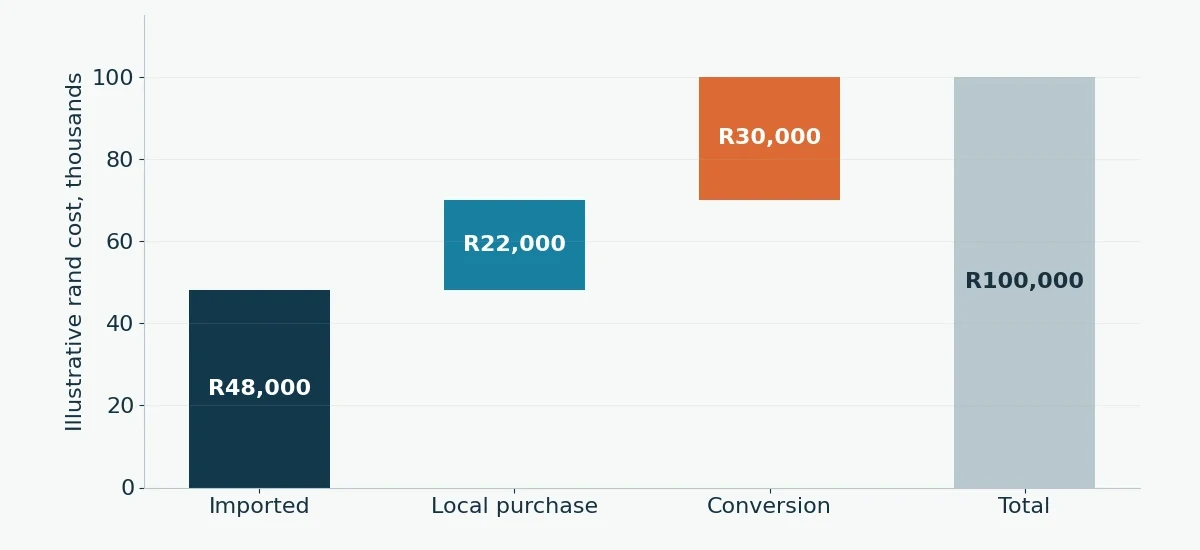
Illustrative arithmetic only. A fictional product has an internal cost sheet with R48,000 of imported inputs, R22,000 of locally purchased inputs and R30,000 of conversion cost. The total is R100,000. Imported inputs are 48% of that cost sheet, but no origin threshold or legal valuation basis is being asserted.
| Component | Illustrative cost (R) |
|---|---|
| Imported | 48,000 |
| Local purchase | 22,000 |
| Conversion | 30,000 |
| Total | 100,000 |
The R22,000 bought locally remains an evidence question. If some components were imported by the distributor, treating the entire amount as originating would be unsupported. Obtain the appropriate evidence and have the adviser decide how the applicable rule treats it.
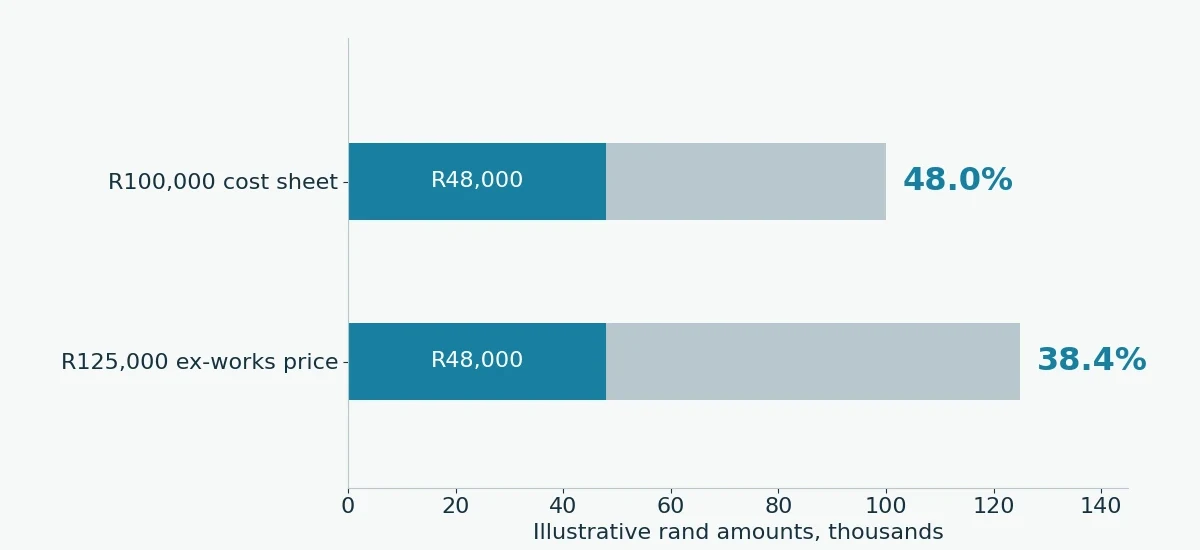
Suppose the fictional ex-works selling price is R125,000. Dividing R48,000 by that different denominator gives 38.4%. Both 48% and 38.4% are arithmetically correct, but they describe different ratios. Neither percentage proves origin without the relevant rule and definitions.
| Denominator | Imported component (R) | Share |
|---|---|---|
| R100,000 cost sheet | 48,000 | 48.0% |
| R125,000 ex-works price | 48,000 | 38.4% |
This is why an article should not tell every manufacturer to meet a single local-content target. Start from the legal test, then build a calculation or process evidence around it. Otherwise the spreadsheet can be polished, consistent and irrelevant.
Document the operation rather than overstating assembly
The SARS-hosted SADC origin annex contains a category of operations that do not confer origin, including specified simple packaging operations. It is an older public reference text, so check the current applicable provisions and product-specific rule. Do not assume that repacking imported goods changes their origin.
Describe assembly accurately. Are components merely placed together, or is there a production operation material to the product rule? The business should not answer by changing the marketing term from assembly to manufacture. It needs an evidenced description of what actually happens.
Ask what would change the assessment: a different input, a different supplier, further processing or proof that an input already qualifies. That question is more constructive than an unsupported yes-or-no statement. A proposed change still requires assessment before the business promises preferential treatment.
The SADC rules of origin pillar sets out the wider decision process. The certificate preparation guide connects a completed assessment to the export file. These are separate stages, not competing explanations of the same task.
Keep the assessment alive when production changes
For imported components, record the product version, rule reference, supplier evidence and date of assessment. If the factory changes a component after the quotation, flag the change before preparing the certificate. A fixed sales code can conceal a materially different input mix.
Maintain evidence at a level that can be linked to exported batches. A producer’s origin claim should not float separately from the stock records used by the dispatch team. Ask how the factory would identify which input evidence supports the units loaded on the truck.
If preference is questioned, use Rejected SADC Preference to identify whether the issue is the rule, certificate or consignment evidence. For broader commercial assumptions, use Landed Cost in South Africa and keep unconfirmed duty savings visible.
For an actual movement, include the relevant product and batch details in the cross-border freight document pack. Freight operations can connect goods to records; the producer and customs adviser must supply and assess the manufacturing evidence.
Questions shippers ask
Do imported components always prevent SADC origin?
No. The applicable finished-product rule determines how non-originating inputs and production are treated. Imported content is a fact to assess, not an automatic conclusion.
Does a local supplier invoice prove a component is originating?
Not by itself. It proves a local purchase. Obtain the relevant origin or producer evidence and assess it under the applicable rule rather than equating purchase location with origin.
Can we choose whichever percentage calculation passes?
No. Use the definitions and calculation basis required by the applicable rule. Changing the denominator to obtain a preferred result is not an origin assessment.
Sources and verification notes
- SADC origin: Introductory notes to AppendixI, hosted by SARS
- SADC product-specific working or processing list, hosted by SARS
- SADC Protocol on Trade, AnnexI, hosted by SARS
Sources checked on 17 November 2026. Charts and worked scenarios are original Synesys educational models; invented quantities, times and amounts are labelled illustrative. They are not customer results, published market prices or regulatory limits.
Continue with this topic
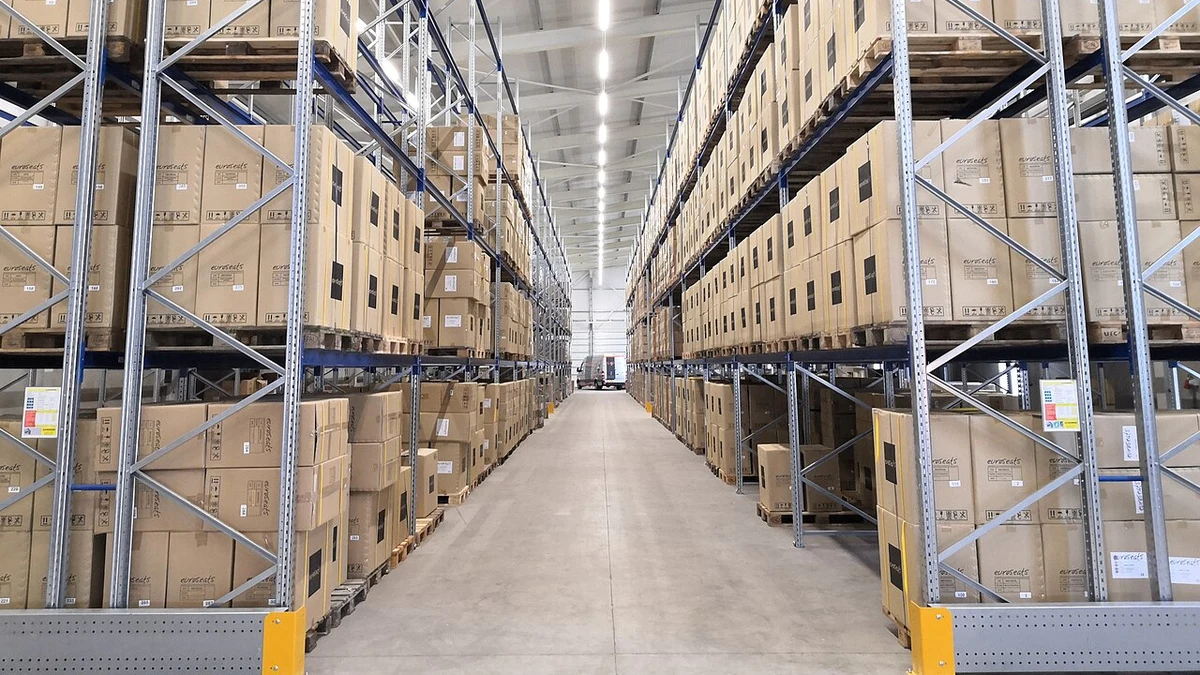
Pallet racking in a Netherlands warehouse, August 2019. Illustrative archive photograph. Photo: Holland Storage Solutions / CC BY-SA 4.0. Cropped and resized. This is documentary stock imagery, not a claim that Synesys owns the pictured facility, vehicle or shipment.