
Lithium batteries need a shipment-specific transport assessment before road collection. Identify the chemistry, model, condition, energy rating and whether batteries are loose, packed with equipment or installed. Obtain the applicable manufacturer evidence and carrier acceptance; do not infer approval from an ordinary product label.
Last verified: . South African guidance; destination-country rules must be checked separately.
In this guide
Lithium batteries: start with the exact model and condition
For lithium batteries, a carton marked “batteries” leaves important questions unanswered. A replacement pack for a tool, a pallet of loose cells and used equipment containing batteries are different shipment descriptions. Give the carrier the exact product and arrangement rather than assuming that all lithium products follow one rule.
Ask the product owner to identify the chemistry and model from reliable manufacturer information. “Rechargeable” does not by itself mean lithium-ion, and a commercial product family name may cover several models. The assessment must relate to the actual goods presented for carriage.
The condition of lithium batteries is a separate question. New stock, returns, damaged products, defective batteries and waste can require different treatment. If a battery is suspected of being unsafe, follow the site’s approved safety process and obtain specialist advice. Do not try to normalise it into an ordinary shipment by calling it used equipment.
Lithium batteries: the evidence request
| Information | Evidence to request | Question it answers |
|---|---|---|
| Identity | Manufacturer, chemistry and exact model or part number | Which product is being assessed? |
| Configuration | Loose, packed with equipment or installed, as applicable | How is it presented for transport? |
| Rating | Relevant manufacturer electrical or lithium-content information | What product data does the specialist need? |
| Test evidence | Applicable model-specific test summary or supporting record | Does evidence relate to this product? |
| Condition and purpose | New, used, return, defective or waste status | Is ordinary carriage an appropriate proposal? |
| Acceptance | Carrier decision and conditions for the actual shipment | Has this collection been accepted? |
Download this article’s main table (CSV)
The UNECE Manual of Tests and Criteria catalogue identifies the battery-testing framework in subsection 38.3 and the published Revision 8 amendment. A UN publication’s existence does not by itself establish the domestic rule applicable to a South African movement. Ask the specialist to confirm the requirements actually governing the load.
For a real manufacturer example, Panasonic Energy’s test-summary library retrieves battery summaries by part number. That illustrates the correct evidence habit: identify the model first. It is not a declaration that a Panasonic document applies to another brand, a modified pack or a damaged return.
Worked example: electrical arithmetic is not transport approval
Illustrative electrical data, not real product specifications. Suppose model A is labelled 12 volts and 8 ampere-hours. Multiplication gives 96 watt-hours. A fictional model B is 12 volts and 10 ampere-hours, giving 120 watt-hours. These numbers demonstrate the units only. They are not transport-exemption thresholds or recommended battery configurations.
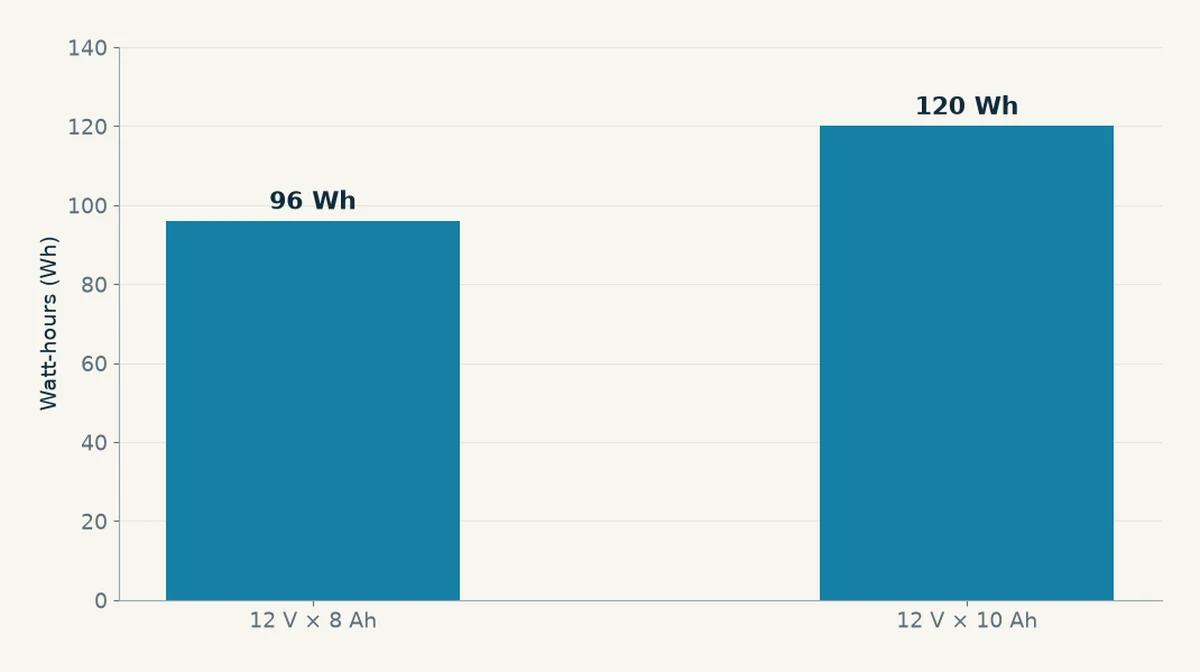
| Rating | Calculation | Watt-hours |
|---|---|---|
| 12 V, 8 Ah | 12 × 8 | 96 Wh |
| 12 V, 10 Ah | 12 × 10 | 120 Wh |
Do not substitute a charger’s input rating for the battery’s nominal rating. If the unit or source is unclear, ask the manufacturer. A number copied into a booking system without its unit can create a different product description from the one the specialist thinks is being assessed.
Now suppose the invented pallet contains eight cartons of model A and two cartons of an unidentified replacement pack. The eight identified cartons do not establish the status of the other two. Keep the unidentified pack as an unresolved line rather than averaging its specification into the rest of the shipment.
| Cartons | Evidence |
|---|---|
| 8 cartons | Matched to the Model A record |
| 2 cartons | Unresolved: replacement model not identified |
The question to the carrier should be explicit: which product line is accepted, on what information and subject to which conditions? A price quoted before the unresolved model is assessed should remain conditional. Truck availability is a separate fact.
Returns need their own assessment
Lithium batteries returning from a customer are not necessarily in the condition originally shipped. Ask why it is being returned and whether the manufacturer has identified a defect, damage or recall. Preserve that information and obtain the appropriate specialist decision before arranging collection.
Do not repack, dismantle, energise, discharge or dispose of a questionable battery based on a general freight article. Those actions need the relevant safe procedures and competent parties. This guide deliberately does not supply packaging recipes or an emergency-response shortcut.
If equipment contains a battery, tell the carrier rather than assuming the battery disappears from the assessment because it is installed. Provide the equipment and battery model information the specialist requests. The presentation can matter, and the precise requirement must be checked for the shipment.
For chemical supplier documents, SDS Section 14 explains how to check the transport-information record. For the full shipper brief, return to Dangerous Goods Road Freight. A generic SDS is not a substitute for model-specific evidence where that evidence is required.
A collection handoff that preserves the decision
- Record the exact accepted product models and configuration.
- Keep the relevant manufacturer records with the shipment file.
- Confirm package counts and product identity against the accepted enquiry.
- Tell the carrier about condition or quantity changes before collection.
- Confirm receiving arrangements and any modal or border handoffs.
- Retain the carrier acceptance reference and unresolved questions.
Brief the warehouse with the accepted product list. A substitute battery pack that fits the customer’s equipment may still differ from the pack the carrier assessed. Commercial interchangeability does not make transport evidence interchangeable. Stop the substitution from becoming an undocumented change.
Use Cargo Ready for Collection to connect product release to the warehouse handoff. Use Who Owns Each Handoff on a Freight Job? to name the product owner, specialist and carrier contacts. The dispatcher should know who can resolve a model or condition question.
If lithium products are proposed alongside other goods, Dangerous Goods Mixed Loads explains why physical space is not the acceptance test. Keep the actual combination subject to competent review. A battery-specific article cannot approve the rest of the truck.
Questions shippers ask
Does a UN38.3 test summary mean any carrier must accept the battery?
No. For lithium batteries, it is one piece of product evidence. The carrier and competent specialist must assess the actual model, condition, packaging, quantity, configuration and route under the applicable requirements.
Can I use a similar model’s test summary?
Do not assume it covers the product. Ask the manufacturer to confirm the exact model and evidence scope. A similar enclosure, brand or electrical rating does not establish that relationship.
Are damaged batteries ordinary return freight?
Do not treat them as ordinary freight without qualified assessment. Follow approved safety procedures and obtain specialist and carrier instructions. This article does not authorise repacking, handling or disposal of an unsafe battery.
Sources and verification notes
- UNECE: Manual of Tests and Criteria, Revision 8 and Amendment 1
- Panasonic Energy: UN38.3 test-summary library
- South African Department of Transport: Dangerous Goods Regulations
Sources checked on 17 November 2026. Charts and worked scenarios are original Synesys educational models; invented quantities, times and amounts are labelled illustrative. They are not customer results, published market prices or regulatory limits.
Continue with this topic
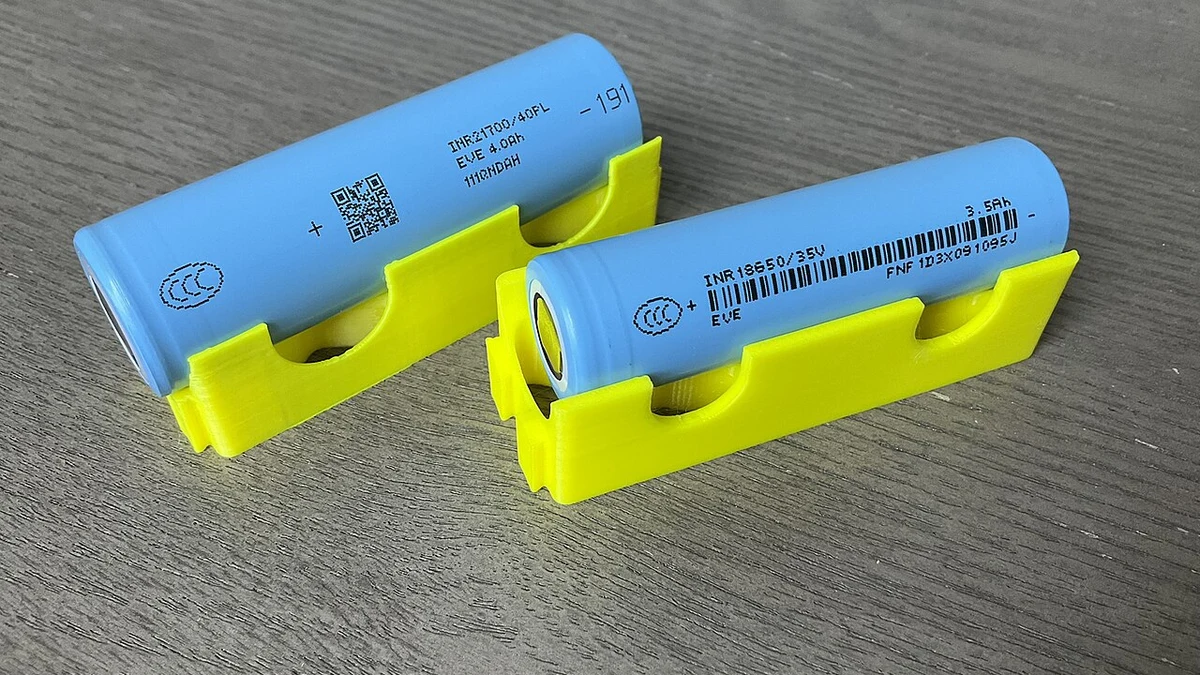
Two cylindrical lithium-ion cells, photographed in March 2025. Product photograph only; the cells are not shown in transport packaging. Photo: Sevenethics / CC0. Cropped and resized. This is documentary stock imagery, not a claim that Synesys owns the pictured facility, vehicle or shipment.