
A freight disruption contingency plan states what evidence will trigger a change, who can approve it and which feasible fallback to use. Prepare it before dispatch. “Find another route” is not a plan if the truck, customs procedure or receiving site cannot accept the change.
Last verified: 17 November 2026. Costs, deadlines and decision timelines below are illustrative training examples. They are not current road alerts, agreed carrier charges or authority to move a particular load.
In this guide
Freight disruption contingency: name the trigger
A Johannesburg delivery may be threatened by a terminal release delay, a road closure or a receiver losing its unloading crew. Those are different problems. Write the trigger as an observable event: an authority confirms a closure; release remains unconfirmed at the review time; or the receiver withdraws the booked appointment.
For each freight disruption contingency trigger, identify the trusted source. A forwarded screenshot without a timestamp should prompt verification, not an immediate route change. Ask the operator to confirm the safe stopping or onward plan. Keep commercial decisions with the cargo owner’s authorised contact rather than putting them on a driver during an incident.
| Field | What to record | Example question |
|---|---|---|
| Confirmed event | Source, location, timestamp and scope | Which part of the booked movement is unavailable? |
| Decision deadline | Time the next option expires | When must the receiver retain or release the crew? |
| Feasible alternatives | Operator, facility and customs confirmations | Can this vehicle and cargo actually use the fallback? |
| Commercial exposure | Incremental cost and exclusions | What changes if we wait another hour? |
| Approver | Name, authority and fallback contact | Who can approve the extra charge before the deadline? |
| Instruction issued | Version, recipients and acknowledgement | Has everyone stopped using the earlier instruction? |
Download this article’s main table (CSV)
Pass the feasibility gates before comparing money
Ask the operator whether the alternate road is suitable for the actual vehicle and load. Consider access, weather, mass and dimension restrictions, authorised rest arrangements and the driver’s safe journey plan. A navigation app’s suggestion is not a vehicle-specific assessment. Do not infer approval from the absence of a warning on the screen.
For a cross-border change, ask the declarant and operator to review the proposed crossing and movement. The C-BRTA permit framework distinguishes different authorisations; a familiar national border does not make every alternative movement permissible. If goods are under customs control, confirm the applicable change procedure with the responsible declarant before moving.
A freight disruption contingency plan also needs receiver confirmation that the fallback arrival is usable. A truck arriving safely after the unloading crew has left has not solved the cargo owner’s delivery problem. Use freight ETA confidence to separate a proposed arrival from a confirmed receiving commitment.
Worked example: when does waiting cost more?
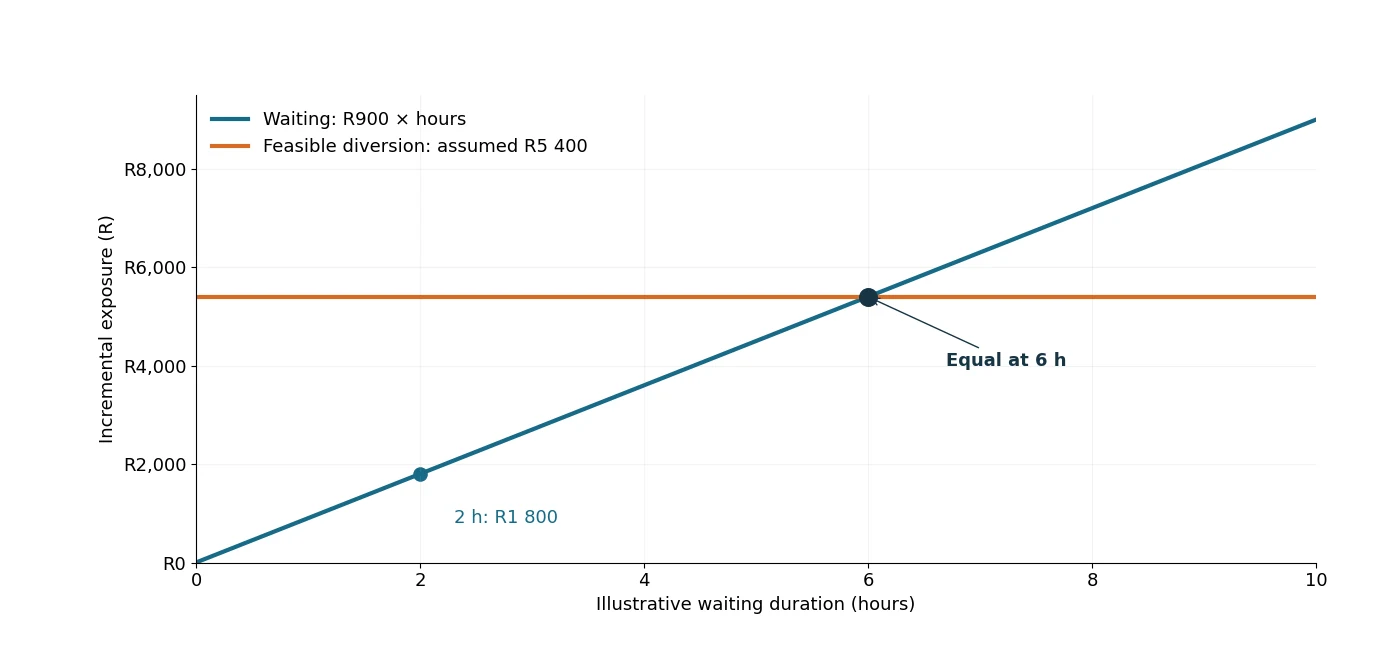
In this illustrative budget, waiting creates an incremental commercial exposure of R900 per hour. A feasible diversion has a once-off incremental cost of R5,400. These are invented assumptions excluding VAT, not market waiting rates or a route quote. Waiting and diversion have equal cost after six hours: R5,400 ÷ R900/hour.
| Option | Exposure |
|---|---|
| Waiting: R900 × hours, 2 h | R1,800 |
| Waiting: R900 × hours, 6 h | R5,400 |
| Feasible diversion (assumed) | R5,400 |
| Crossover | Equal at 6 h |
If an approved source expects the disruption to resolve in two hours, the model gives R1,800 of waiting exposure. If the closure duration is unknown, there is no reliable single total to compare. Show a range and state which uncertainty controls the choice. Do not turn “unknown” into zero because the spreadsheet requires a number.
The model also assumes waiting costs accumulate continuously. A contractual free period, a minimum call-out fee or a missed delivery shift can produce a step change instead. Replace the R900/hour line with the applicable terms when actual evidence exists. The freight quote exclusions guide helps identify charges that have not been priced yet.
Work back from the option that expires first
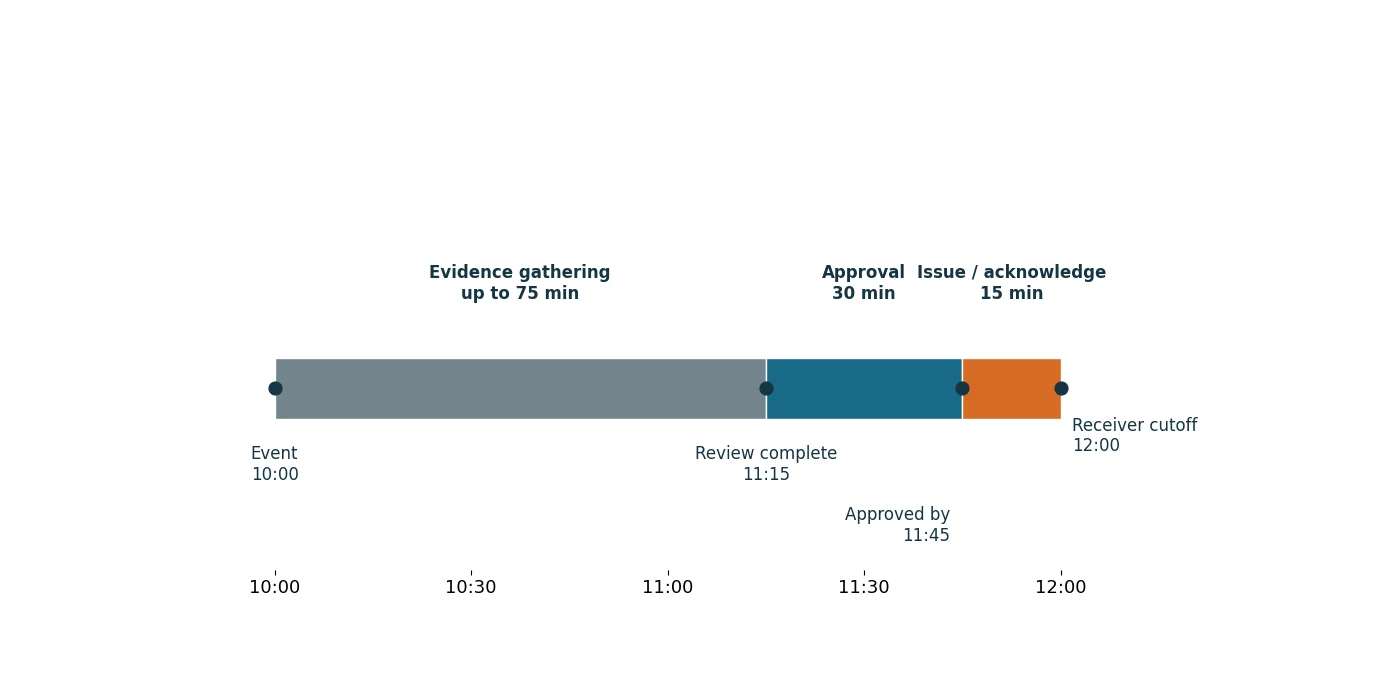
Consider another illustrative decision. At 10:00 the operator reports a disruption. A receiver requires an answer by 12:00 to keep the afternoon slot. The commercial approver needs 30 minutes, and dispatch needs a further 15 minutes to issue and acknowledge instructions. The evidence review therefore needs to finish by 11:15, not at noon.
| Step | Duration | Ends |
|---|---|---|
| Event | 10:00 | |
| Evidence gathering | up to 75 min | 11:15 (review complete) |
| Approval | 30 min | 11:45 (approved by) |
| Issue / acknowledge | 15 min | 12:00 (receiver cutoff) |
Ask what should happen if the approver cannot be reached. The answer may be to preserve a safe waiting arrangement and release the receiver slot, rather than commit to an unapproved diversion. Agree that fallback in the original job brief. A last-minute incident is a poor time to discover that nobody owns the decision.
Use forecasts without confusing them with permission
The CSIR’s PortOps account, published in August 2026, describes a forecast-supported approach to wind-related port decisions. A forecast can support preparedness. The terminal’s confirmed operating status and the individual shipment’s release still determine what can actually happen next.
For a road movement, use the current information from the relevant road operator or authority and the transport operator’s assessment. Record when that information was obtained and when it will be checked again. This article intentionally supplies no live closure list: an undated static list would be the wrong tool during a changing incident.
Close the incident, then change the next booking
Keep the original instruction and the authorised replacement in the freight disruption contingency record. Record who acknowledged the change, when the truck moved, what the receiver accepted and which additional costs were approved. Distinguish estimated exposure from the final invoice. A decision can be reasonable on the available evidence even when the eventual delay is shorter than expected.
At the review, ask which check would have changed the decision earlier. If the missing item was the receiver’s last acceptance time, add that field to the next brief. If it was a permit question, bring the operator into route selection earlier. Use the 15-minute freight review and exception update guide to preserve the lesson.
This supporting guide belongs to SADC freight route planning. Read alternative port routing when the gateway changes, and freight ETA confidence when a revised delivery window needs explaining.
Freight disruption contingency questions
Should dispatch divert as soon as a delay is reported?
No. Verify the event and pass the safety, vehicle, cargo, customs and receiving checks. Compare feasible options with the authorised decision-maker. A cheaper imagined diversion is not a usable alternative.
Who should approve additional charges?
The party designated in the booking’s commercial arrangements. Name the approver and their authority before departure. If the contact is unavailable, follow the agreed fallback rather than assuming the driver or dispatcher can accept the cost.
What should the customer receive during an uncertain disruption?
The confirmed event, what remains unknown, the next evidence expected, the decision deadline and the person responsible. Give a new arrival commitment only when its critical assumptions and receiving arrangements are clear.
Sources and verification
- CSIR: PortOps tool to aid Port of Cape Town’s wind woes, 12 August 2026 — checked 17 November 2026.
- C-BRTA: permit overview — checked 17 November 2026.
Continue with this topic
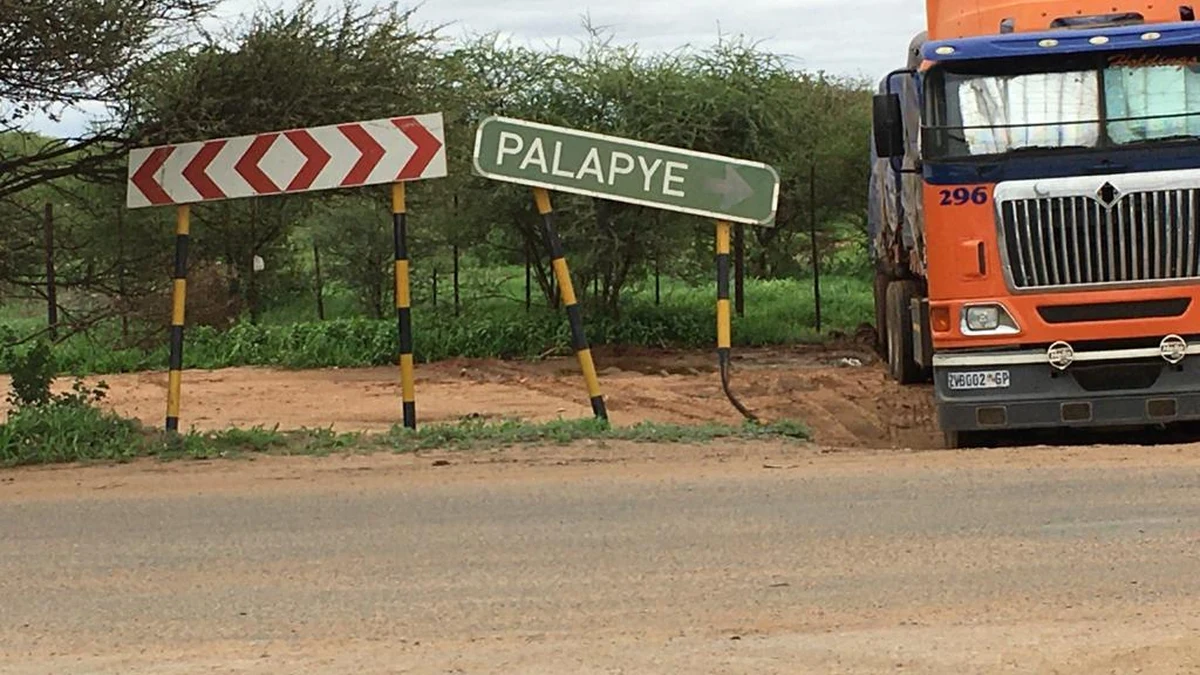
A truck beside the Palapye direction sign in Botswana, December 2019. Archive route photograph, not a current traffic instruction. Photo: JonGT / CC BY-SA 4.0. Cropped and resized. This is documentary stock imagery, not a claim that Synesys owns the pictured facility, vehicle or shipment.